
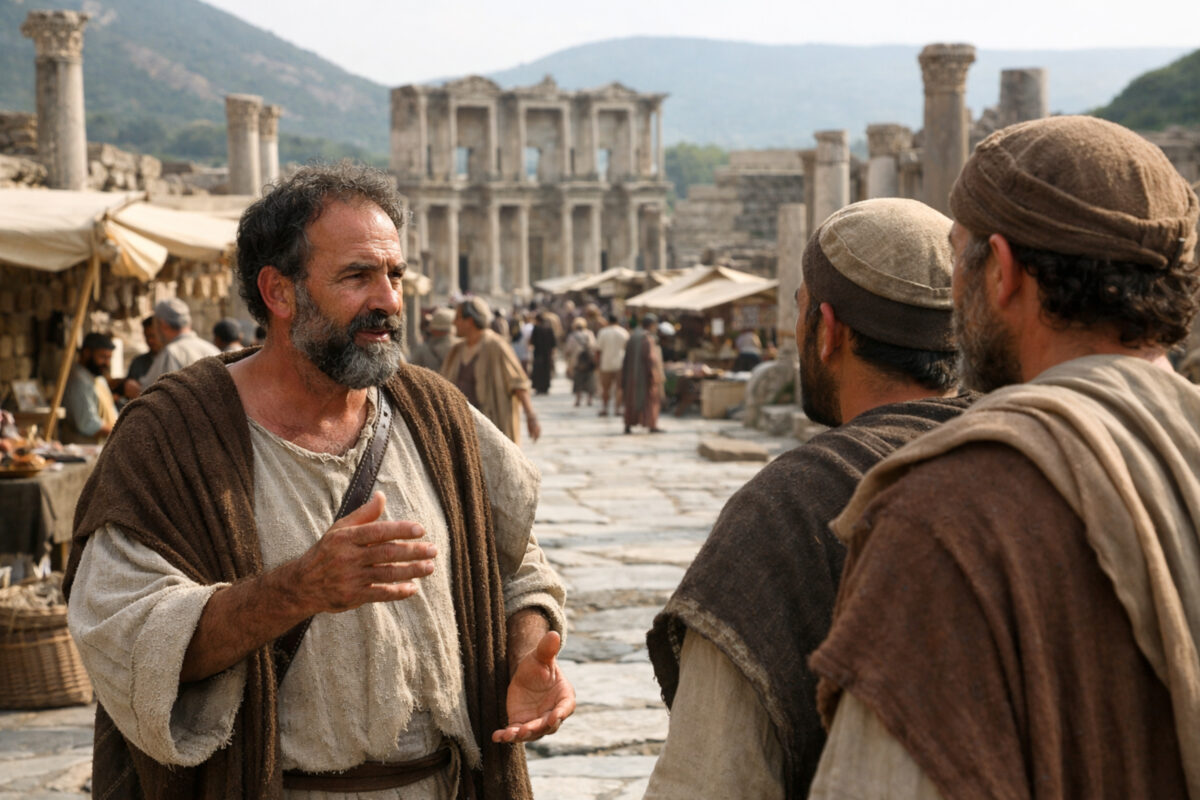
Before churches had walls, the message was spoken where the city already gathered.
When Paul arrived in Ephesus, he did not begin in the building where Christians assembled for fellowship and worship. He stepped into the city’s shared life. Conversations unfolded in the open—where trade was negotiated, work was done, and strangers passed through. Faith did not wait for a room of its own. It entered the places people already trusted as public ground.
The Agora as the City’s Heart
The agora was not a religious space. It was the center of civic life. Commerce, debate, news, and dispute all flowed through it. Ideas were tested there as readily as goods. To speak in the agora was to invite response—sometimes curiosity, sometimes resistance.
This made the agora a natural setting for Paul’s work. He did not arrive as a teacher seeking a platform. He reasoned with people where they already stood, in the midst of ordinary concerns and competing claims. Nothing about the space guaranteed agreement or safety.
Why Paul Went There
Paul’s message addressed real lives shaped by labor, status, tradition, and uncertainty. In the agora, belief encountered those realities directly. Claims could be challenged. Words were overheard, repeated, and questioned. The message was exposed to misunderstanding and opposition, not sheltered from it.
This exposure mattered. Paul’s confidence did not rest in winning arguments, but in the truthfulness of what he proclaimed. Speaking in such a place meant accepting scrutiny and relinquishing control over how the message would be received.
A Place for the First Believers
Other early followers of Jesus learned to live with similar visibility. Faith spread not through formal institutions at first, but through recognizable lives—through speech, conduct, and endurance under observation.
The agora became a testing ground. Some listened with interest. Others dismissed the message outright. Still others opposed it openly. Belief did not advance through ease or applause, but through clarity, patience, and restraint.
Testing, Not Triumph
Public spaces did not promise welcome. In Ephesus, economic interests, civic pride, and religious loyalty were tightly bound together. When the message disrupted those ties, resistance followed. The agora revealed how costly belief could become when it unsettled familiar arrangements.
Faith endured there not because it was celebrated, but because it was lived consistently in full view of others. The city watched. The response was mixed. The message remained.
Why This Still Matters
The earliest faith took shape in places where outcomes could not be managed. The agora reminds us that belief did not grow in isolation, but in engagement with everyday life—where ideas were weighed and actions noticed. Long before faith found shelter in buildings or symbols, it was tested in public spaces shaped by work, exchange, and disagreement.
In more recent language, this same vision is echoed in Streets of the City by Stuart Townend, which reflects on faith lived openly amid the movement and tension of ordinary streets. The song offers a modern resonance with an ancient reality: belief spoken aloud where life is already unfolding, and where response cannot be controlled.
Author Note
As we imagine Paul and the early followers of Jesus, we are continually drawn back to the public spaces they inhabited. Faith did not wait for protection or recognition. It took shape where people already lived and worked, and that reality continues to shape how we tell their story.
Explore More
You can explore related posts across the remaining areas of the St. Hans blog: Characters & World, Behind the Books, Author Journey, and Updates & Releases.
Written by D. D. Shiell — Authors of the Nightingale Mountain Trilogy