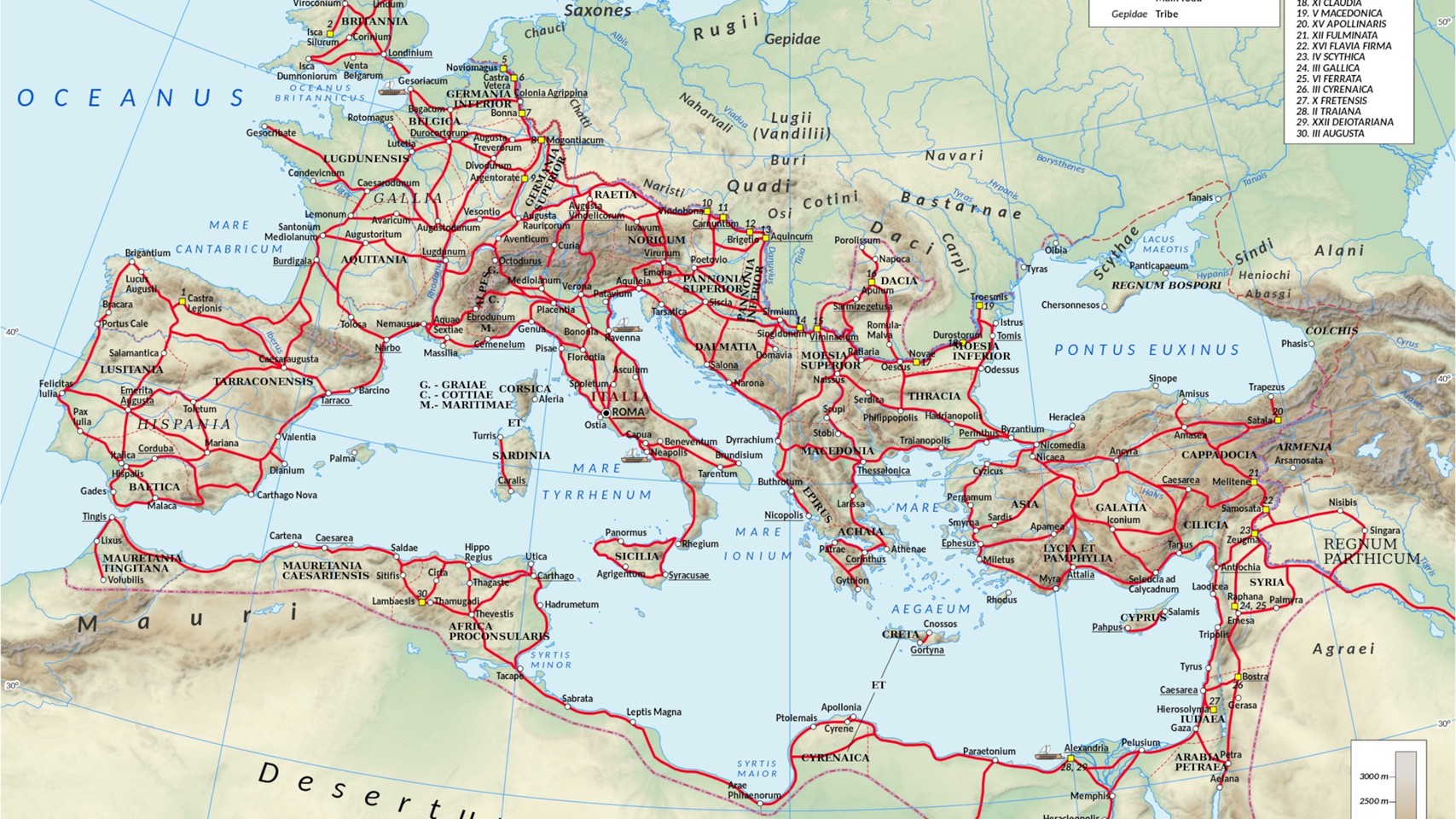
Long before the message of Jesus spread across the Roman world, the empire had already laid the roads that would carry it.
The Empire That Built Roads
When the Roman Empire expanded across the Mediterranean, it faced a simple problem: distance.
Armies had to move quickly. Governors had to communicate with Rome. Trade had to flow between cities separated by mountains, rivers, and deserts. To solve this, Rome built something the ancient world had never seen on such a scale — an integrated network of durable roads.
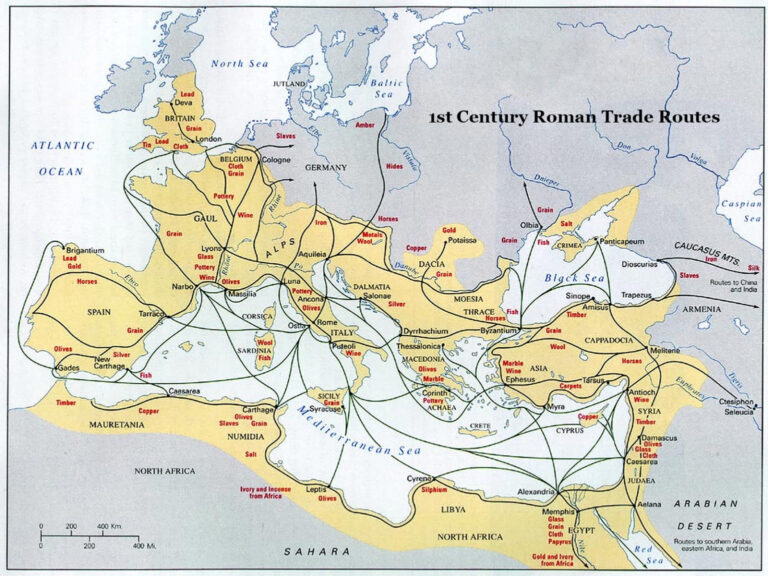
By the first century, the empire maintained more than 250,000 miles of roads, with roughly 50,000 miles paved in stone. These roads linked cities from Britain to Judea and from Spain to Syria.
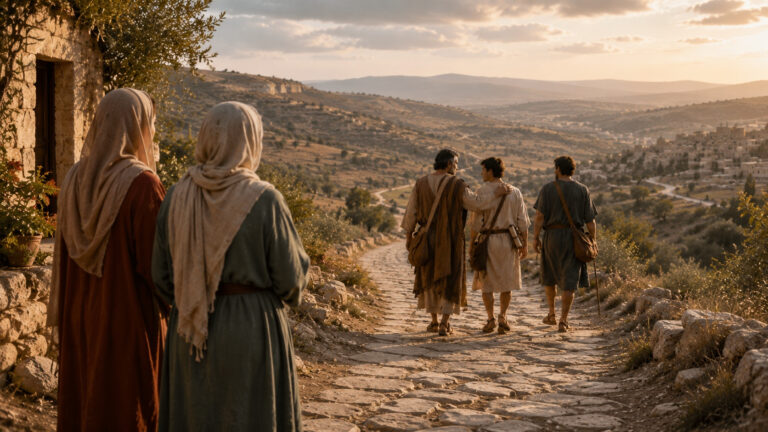
Roman roads were not dirt paths worn by travel. They were carefully engineered. Layers of stone created a stable foundation. Slightly raised centers allowed water to drain away. Milestones marked distance. Way stations supported travelers and couriers.
The system allowed messages, soldiers, merchants, and travelers to move across the empire with remarkable reliability.
No one who built these roads imagined that they would also carry the Good News.
The Roads Beneath Paul’s Journeys
When we read the book of Acts, it is easy to picture the apostle Paul moving from city to city as if the map were small.
But every journey required real roads.
When Paul traveled from Philippi to Thessalonica, he followed the Via Egnatia, one of Rome’s great east-west highways. Stretching across the Balkans from the Adriatic Sea toward Byzantium, this road connected major commercial centers and military outposts.
The Via Egnatia allowed travelers to move through Macedonia efficiently, linking cities that would become early centers of Christian teaching.
Other Roman roads carried Paul across Asia Minor. Routes between cities like Ephesus, Antioch of Pisidia, and Iconium were part of a broader infrastructure designed to bind the empire together.
Rome built these roads for power, governance, and trade. Yet those same roads quietly became pathways for something far greater.
Ordinary Roads, Extraordinary Message
The spread of the early church did not occur in isolation. It unfolded within the existing structures of the Roman world.
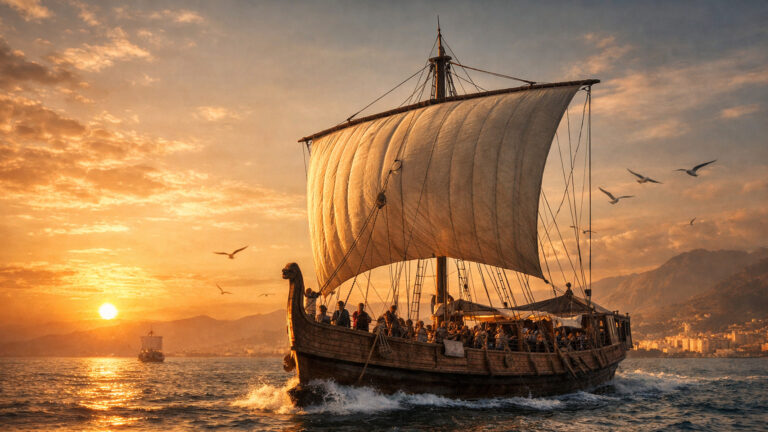
Roads made travel possible. Ports connected distant provinces. Cities gathered people from many cultures and languages.
Because of this infrastructure, a message that began in Judea could move across the Mediterranean within a generation.
A teacher in Antioch could write a letter to believers in Corinth. A traveler from Ephesus could carry news to Rome. A missionary could revisit communities planted years earlier.
The roads did not create the message. But they carried it.
Why This Still Matters
When we read the story of the early church, we often focus on the courage of the messengers.
But the message also moved through the hidden frameworks of the world around them.
Roads. Ships. Languages. Political systems.
None of these structures were created for the sake of the gospel. Yet they became part of the story.
Again and again in history, God works through the very systems people build for other purposes.
The Roman Empire laid stone roads across continents. The Good News walked upon them.
Author Note
As we researched and wrote the Nightingale Mountain Trilogy, we became increasingly aware of the physical world that surrounded the early followers of Jesus. Travel in the first century meant walking real distances over real roads. Remembering that setting helped us imagine the journeys our characters take and the world in which the Good News first spread.
Explore More
You can explore related posts across the remaining areas of the St. Hans blog: Nightingale Mountain Trilogy, Ministry & Church Leadership, Updates & Releases.
Written by D. D. Shiell — Authors of the Nightingale Mountain Trilogy