Long before modern relief organizations, Christian communities were collecting money and sending trusted representatives to help believers in distant regions.
When a famine or humanitarian crisis occurs today, relief organizations can raise funds and send assistance across international borders. Nearly two thousand years ago, the first Christians faced similar challenges without modern transportation, communication, or banking.
They collected financial contributions for believers hundreds of miles away and arranged for trusted individuals to deliver them. Although these efforts took place largely within the Roman Empire, they crossed geographical and cultural boundaries.
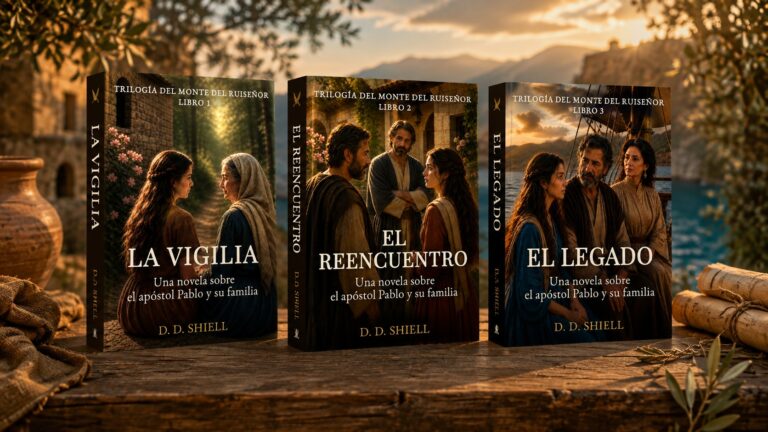
These early examples of organized relief provided historical background for The Reunion, the second novel in our Nightingale Mountain Trilogy.
FAMINE RELIEF FROM ANTIOCH TO JUDEA
One of the earliest examples appears in Acts 11:27–30.
The prophet Agabus came to Antioch and predicted a severe famine. The Christians there decided to send relief to believers in Judea, each contributing according to their ability. Barnabas and Saul, later known as Paul, were entrusted with delivering the assistance to the elders.
This was more than local charity. Christians in Antioch were responding to needs in another region, gathering contributions and selecting trusted representatives to carry them.
In The Reunion, Paul and Barnabas’s earlier journey to Jerusalem forms part of the background to their missionary work. Their connections with Antioch and Jerusalem also help establish the relationships between communities that would become increasingly important as Christianity spread.
The novel’s more extensive treatment of financial relief, however, concerns a later collection organized by Paul.
PAUL’S COLLECTION FOR JERUSALEM
Years later, Paul encouraged predominantly Gentile congregations to contribute financially to impoverished Christians in Jerusalem.
In 1 Corinthians 16:1–4, he instructed believers to set aside contributions regularly. In 2 Corinthians 8–9, he praised the generosity of the Macedonian churches and encouraged the Corinthians to complete their promised contributions.
The collection provided practical assistance while strengthening relationships between Jewish and Gentile Christians living in different regions.
We incorporated this undertaking into Chapters 24–26 of The Reunion.
In Chapter 24, Paul instructs his coworkers to encourage the Macedonian believers to prepare their contributions. Chapter 25 follows his visits to the churches and the generosity he encounters.
In Philippi, Antheia, a fictional character connected to the biblical account of an enslaved woman with a spirit of divination (Acts 16:16–18), contributes despite having little money herself.
Her decision allows readers to consider what giving might have meant to someone whose own circumstances were difficult.
The believers in Thessalonica also contribute. Through these scenes, we wanted to show how a large relief effort depended on the individual decisions and sacrifices of ordinary people.
SAFEGUARDING THE RELIEF FUNDS
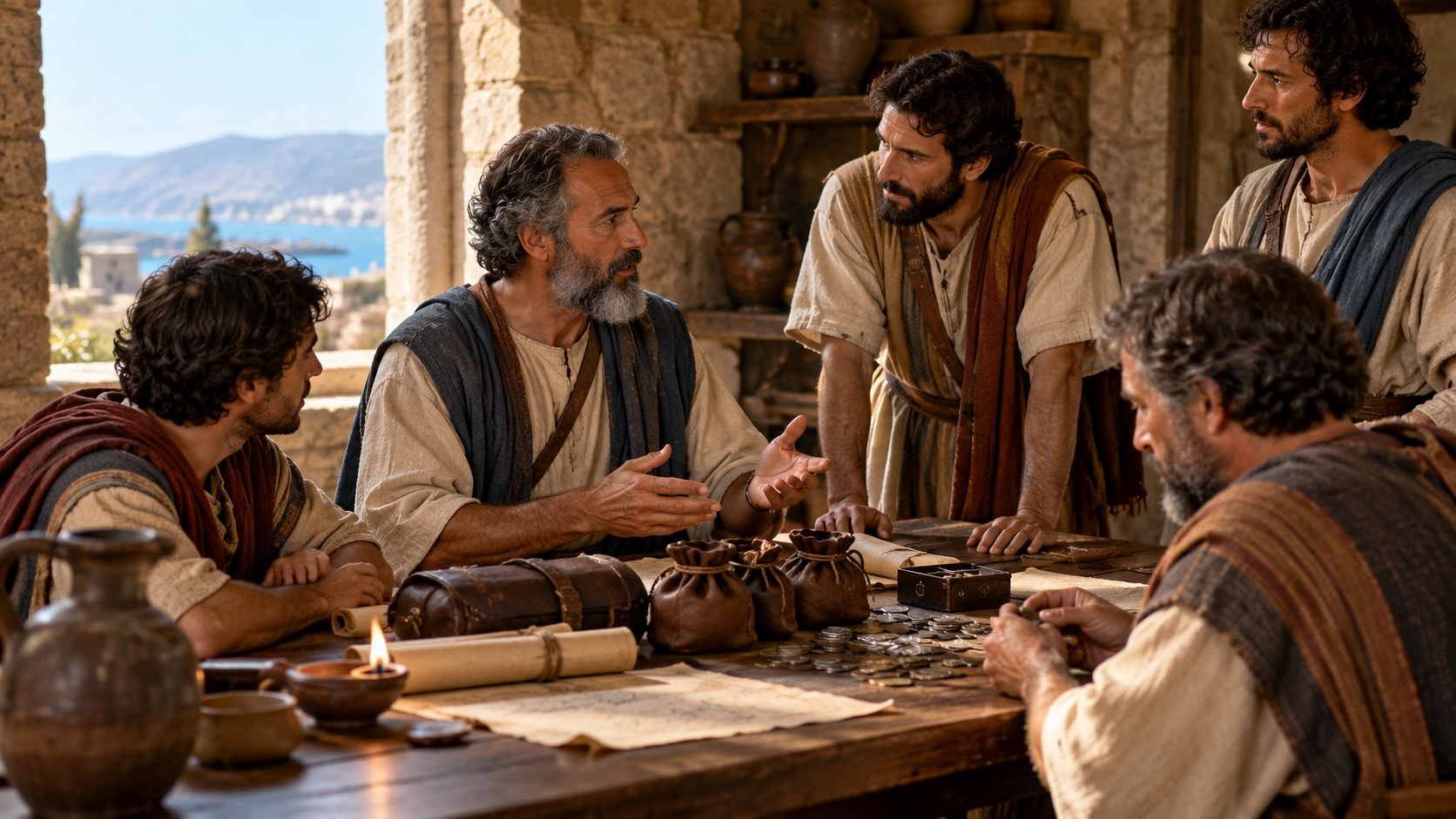
Raising money was only part of the challenge. Someone also had to transport it safely.
Travelers carrying substantial contributions faced the dangers of long journeys, uncertain sea voyages, and possible theft. The money represented the sacrifices of many believers, making its protection especially important.
Paul recognized the need for trustworthy administration. In 2 Corinthians 8:18–21, he describes companions involved in handling the collection and emphasizes the importance of acting honorably before God and other people.
Acts 20:4 identifies several men accompanying Paul during his journey toward Jerusalem, including Aristarchus, Timothy, Tychicus, and Trophimus. Although the passage does not explicitly say they traveled together to protect the collection, traveling as a group offered practical advantages, including mutual assistance and greater security.
These concerns also appear in The Reunion.
In Chapter 25, Paul prepares to travel to Jerusalem with companions representing different churches. As he prepares to sail from Cenchreae, however, he learns of a plot against his life and changes his route, returning through Macedonia.
This follows Acts 20:3, which records that Paul altered his plans because of a plot against him.
In the novel, his companions must adjust their plans while continuing toward Jerusalem with the contributions entrusted to them.
The biblical account establishes the importance of accountability. Our fictional portrayal explores the practical difficulties of safeguarding the money and completing the journey.
THE PEOPLE BEHIND THE COLLECTIONS
The New Testament describes these relief efforts but does not record every conversation or personal decision involved.
We know that the Macedonian believers contributed generously despite their difficulties. We know that Paul arranged for representatives to assist with the collection and that his journey involved danger.
Historical fiction allows us to explore what these circumstances might have meant to the individuals involved.
In The Reunion, Antheia’s contribution, Paul’s conversations with believers, and the experiences of his traveling companions help readers see the collection as more than a financial transaction.
It involved people making sacrifices, accepting responsibilities, and trusting others to deliver their gifts.
WHY THIS STILL MATTERS
Modern international relief organizations face many of the same basic questions. How can financial assistance reach people far away? Who should handle the funds? How can contributors know their donations will be used responsibly?
Paul’s arrangements demonstrate that generosity and accountability belong together. Trusted representatives and careful administration were essential to delivering assistance.
The collections also remind us that concern for people beyond one’s immediate community has a long history. Christians in Antioch, Macedonia, and Achaia were willing to help believers living far away, despite the difficulties involved.
Today, transferring money across great distances is relatively easy. Establishing trust, maintaining accountability, and recognizing the needs of people we may never meet remain important.
AUTHOR NOTE
While writing The Reunion, we wanted to portray the practical ways early Christian communities supported one another. Paul’s collection for Jerusalem gave us an opportunity to explore generosity alongside the responsibilities of gathering contributions, safeguarding them, and delivering them to people in need.
The biblical record provided the historical framework. Our fictional characters and conversations helped us explore how these events might have affected the people who participated.
Featured Reading
If you enjoy exploring the historical world behind the New Testament, we invite you to continue the journey through the Nightingale Mountain Trilogy. The novels bring to life the people, places, and everyday realities of the first-century church, where history and faith meet through story.
Explore More
You can explore related posts across the remaining areas of the St. Hans blog: Nightingale Mountain Trilogy, Ministry & Church Leadership, Updates & Releases.
Written by D. D. Shiell — Author of the Nightingale Mountain Trilogy
Frequently Asked Questions
What is Christian historical fiction?
Christian historical fiction is a genre that combines historical settings and storytelling with themes related to faith, spiritual life, and the lived experiences of people shaped by religious belief.
What are some popular settings for Christian historical fiction?
Common settings include biblical times, the Roman Empire, the early church, medieval Europe, the Reformation, and various periods of modern history.
Why do readers enjoy Christian historical fiction?
Many readers enjoy the combination of immersive history, emotionally grounded storytelling, spiritual themes, and meaningful human questions explored through another time and place.
What makes early church historical fiction unique?
Stories set in the early church world often combine Roman history, biblical context, cultural tension, persecution, travel, and the spread of Christianity throughout the Mediterranean world.
What is the Nightingale Mountain Trilogy about?
The Nightingale Mountain Trilogy is a Christian historical fiction series set in the first-century Roman world, exploring the lives of families and communities connected to the growth of the early church.