In 1988, our family packed our suitcases and moved to Norway while a Norwegian pastor and his family moved into our home in Iowa.
In the spring of 1988, the five of us left Cedar Rapids, Iowa, and headed for Larvik, Norway.
Our children—Bethany, Megan, and Ian—were thirteen, eleven, and ten years old. We packed three suitcases apiece and prepared to live in another country for nearly a year.
Meanwhile, a Norwegian pastor, Sjur Isaksen, and his family were preparing to travel in the opposite direction.
They would live in our house.
We would live in theirs.
They would drive our car. We would drive theirs.
Sjur would serve our congregation in Cedar Rapids. Dell would serve alongside two other pastors in the Church of Norway parish in Larvik.
At first glance, it sounds like we exchanged homes and jobs.
But that isn’t really what happened.
We exchanged lives.
Two Families Trading Places
There was no Airbnb, no home-exchange website, no email, and certainly no video call where the two families could walk each other through their homes before agreeing to the arrangement.
The exchange was worked out through churches, bishops, letters, telephone calls, and a great deal of trust.
Our congregation was Gloria Dei Lutheran Church in Cedar Rapids, with about 550 baptized members. Dell was its only pastor.
The Larvik parish belonged to the Church of Norway and had about 8,000 baptized members. Sjur was one of three pastors serving there.
Each pastor continued to receive his regular salary from his own congregation. We exchanged homes, cars, and pastoral responsibilities. Each family took care of its own house and car while the other family used them. Each family paid its own transportation across the Atlantic.
The goal was surprisingly simple: make it possible for two families to live in another country for a year without having to maintain two separate lives financially.
But the practical arrangement only explains how the exchange worked.
It doesn’t explain what it became.
Living Someone Else’s Everyday Life
Most travel keeps part of your ordinary life intact.
You pack a suitcase. You stay in a hotel. You visit the places you came to see. Then you go home.
We didn’t have a home waiting for us at the end of each sightseeing day.
The Norwegian family’s home was our home.
Their community became our community. Their church became our church. Their neighbors became our neighbors. Our children attended Norwegian schools and made Norwegian friends. Dell entered a church life and pastoral setting very different from the one he had left in Iowa.
At the same time, another family was experiencing our life in Cedar Rapids.
That was what made the exchange different from simply spending a year abroad.
Neither family stood outside the other’s world looking in.
For a year, we stepped inside.
The Exchange Almost Didn’t Happen
Looking back, it can sound as though we had an adventurous idea, made the arrangements, packed our bags, and went to Norway.
It wasn’t nearly that simple.
At one point, a letter confirming the exchange was mailed from Norway to our bishop in the United States—and disappeared.
We assumed the arrangements had fallen through and reluctantly gave up on the idea. Then one Sunday evening our bishop telephoned. Norway had called. They had been waiting for an answer to a letter we had never received.
The exchange was alive again.
Then, only two and a half months before our departure, Bethany was injured in a sledding accident. She shattered one vertebra and cracked another. She spent two weeks in the hospital, another two weeks recuperating at home, and continued physical therapy until the week before we left.
There were moments when the year in Norway seemed anything but certain.
Yet on April 1, 1988, we left.
It Became Part of Who We Are
When we returned to the United States, we began writing about the experience primarily for our family. We wanted our children—and someday our grandchildren—to have the story.
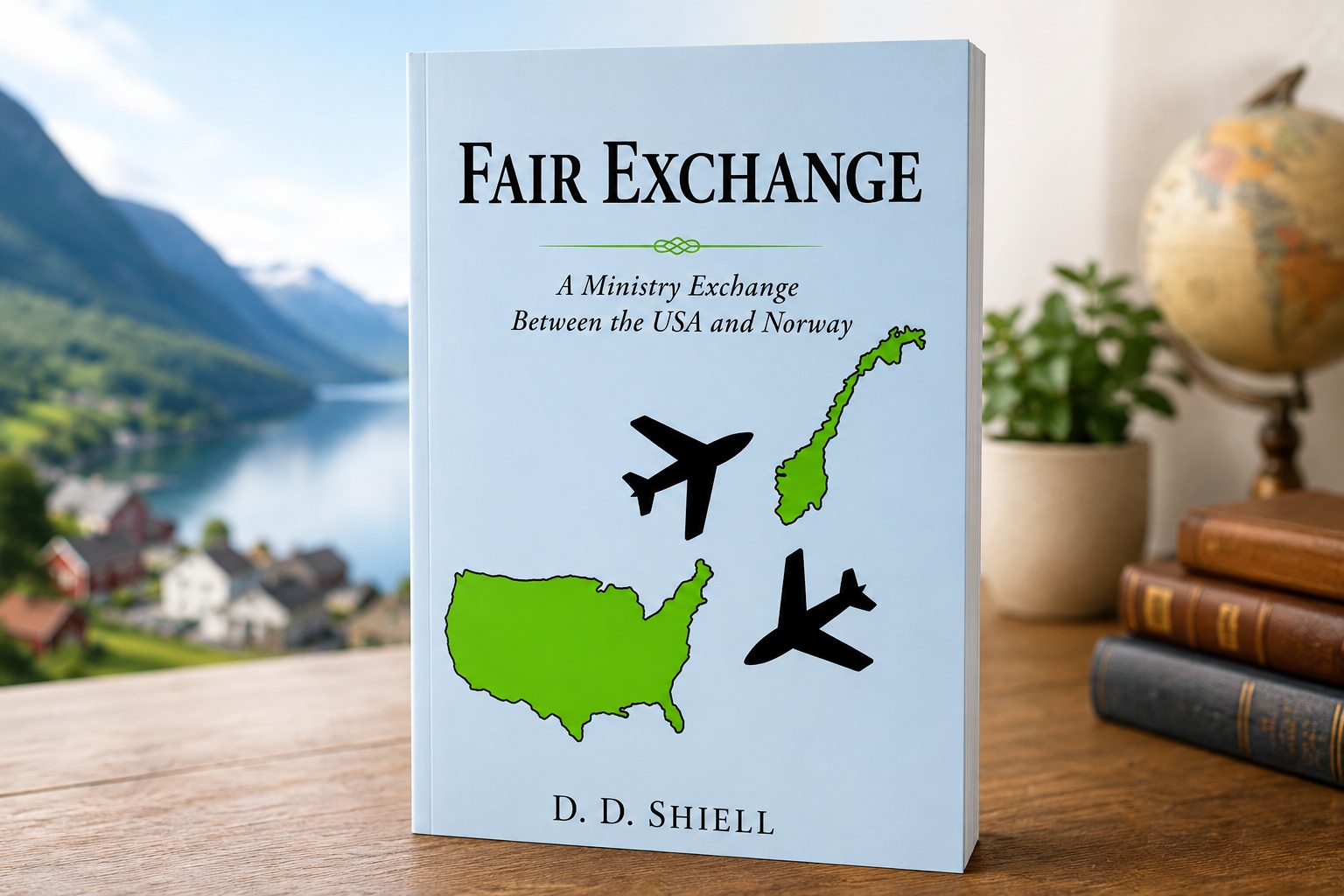
Those notes eventually became Fair Exchange.
But the title came to mean more than the practical exchange we had arranged.
Two families had exchanged homes, cars, churches, communities, friends, and the routines of everyday life. Along the way, people on both sides of the Atlantic became part of one another’s lives.
And those relationships did not disappear when the exchange ended.
Over the years, members of both families traveled back and forth between Norway and the United States. Our children maintained friendships they had formed during that year. In 2015, we returned to Larvik with two of our children, their spouses, and four of our grandchildren. Our grandchildren played on the same elementary-school playground equipment their parents had played on years earlier.
Nearly three decades had passed.
Our year in Norway become part of our family’s story.
What began as an exchange of lives for a year became part of who we are for a lifetime.
Author Note
We originally wrote Fair Exchange after returning from Norway because we wanted to preserve the experience for our children and future grandchildren. What began as a family record became the story of a year that shaped the way we understood family, church, hospitality, culture, and home. Nearly four decades later, we remain grateful for the Norwegian family who trusted us with their life for a year—and for the people of Larvik who helped make Norway our second home.
Explore More
You can explore related posts across the remaining areas of the St. Hans blog: Nightingale Mountain Trilogy, Ministry & Church Leadership, Updates & Releases.
Written by D. D. Shiell – Authors of Fair Exchange