
We can no longer assume that the people around us know the basic stories, people, and ideas of the Bible.
For much of American history, Christianity was woven into the culture deeply enough that even people who rarely attended church usually knew something about the Bible. They had heard of Adam and Eve, Noah, Moses, David and Goliath, and the Ten Commandments. Most knew the basic story of the birth of Jesus, his crucifixion, and his resurrection. They might not have known the Bible well, and they certainly did not all believe it, but there was a common store of biblical knowledge.
That is increasingly less true. Many people today have had little meaningful exposure to the Bible or Christianity. They may recognize the name Jesus but know surprisingly little about what he said or did. They may have heard of the apostle Paul without knowing who he was or why he matters. Even basic Christian terms can be unfamiliar or mean something quite different to someone who has never been part of a church.
This presents a challenge for those of us who want to communicate the Christian story. We have to become more careful about what we assume people already know.
WHEN THE BACKGROUND IS MISSING
Consider a statement that would seem perfectly ordinary to many Christians: “Paul wrote a letter to the church in Corinth.”
There is actually a great deal of assumed knowledge packed into that sentence. A reader needs to know something about Paul, where Corinth was, what Christians meant by a church, how a Christian community came to exist there, and why Paul had a relationship with it. It helps to know that Paul traveled extensively through the Roman world and that letters were one of the ways he continued to teach and encourage communities after he had moved on.
Someone who has been reading the Bible for decades supplies that background almost automatically. Someone encountering the New Testament for the first time does not.
That does not mean the newcomer lacks intelligence or interest. It simply means that we have started the conversation several chapters too late. Biblical literacy, therefore, involves more than teaching people a collection of Bible stories or helping them recognize biblical names. It includes providing enough context for those stories to make sense.
PUTTING PEOPLE BACK INTO THEIR WORLD
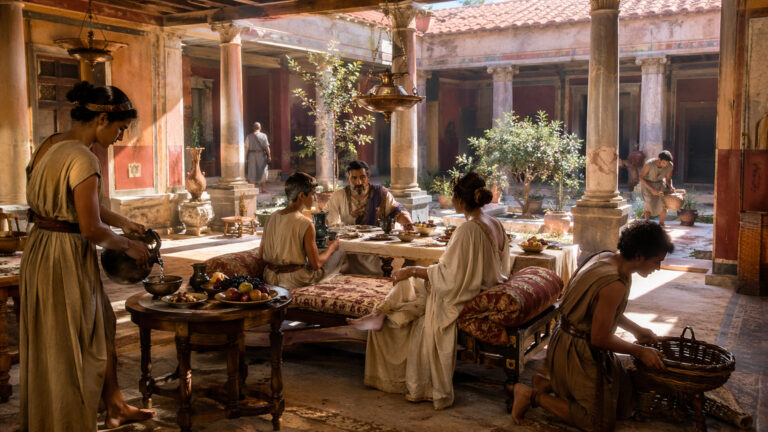
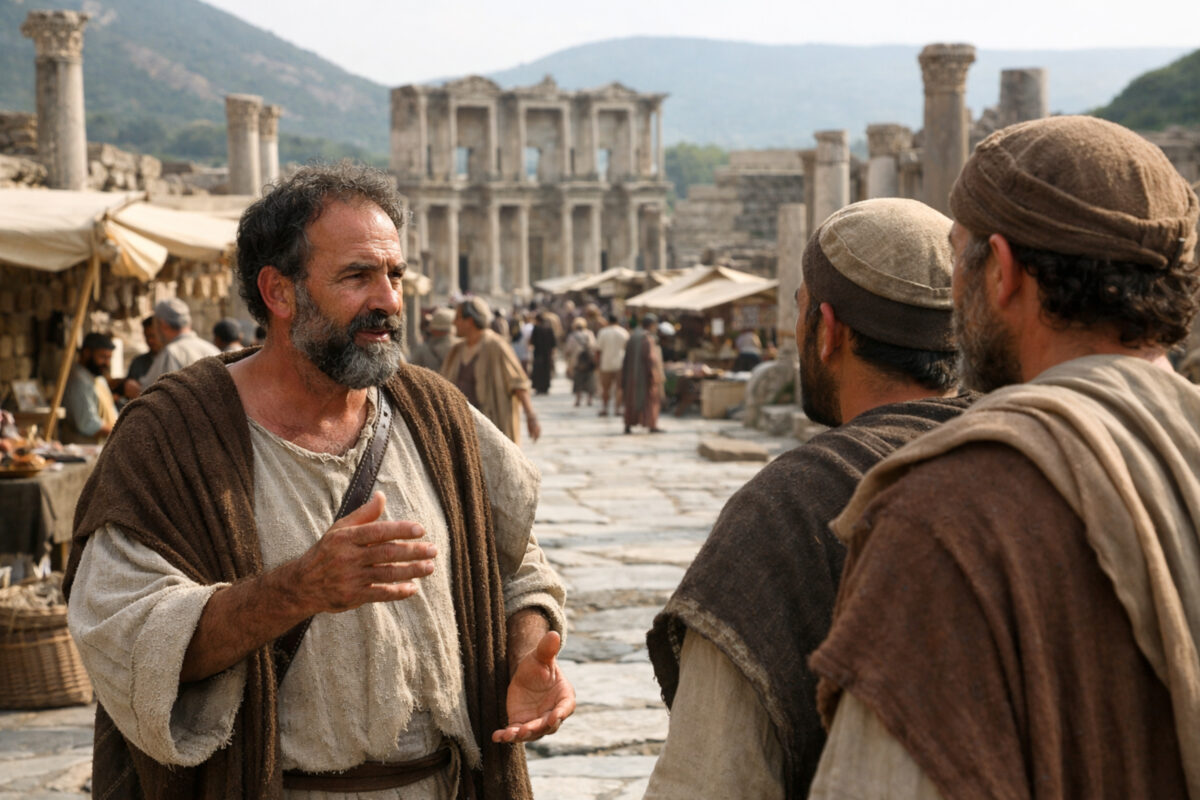
One of the things history can do is put biblical people back into the world in which they actually lived. Paul did not travel around a vague place called “Bible times.” He traveled through the Roman Empire. He walked Roman roads, sailed on Mediterranean ships, entered crowded cities, worked for a living, visited synagogues, stayed in people’s homes, and encountered people with religious beliefs very different from his own.
The first Christians also lived ordinary lives. They had families and occupations. They worried about money and food. They dealt with government officials, social expectations, religious disagreements, sickness, travel, and all of the other realities of life in the first century.
Knowing something about that world can change the way we read the New Testament. Places on a map become communities. Names become people. Paul’s letters become correspondence between people who knew one another and were trying to work out what it meant to follow Jesus in the circumstances of their own lives.
This is one reason we have spent so much time on the St. Hans Books blog exploring the world surrounding the New Testament. Articles about Roman roads, houses, meals, work, travel, languages, citizenship, and the companions of Paul are not simply excursions into ancient history. They provide some of the background that helps us understand the people and events we encounter in Scripture.
GIVING CURIOSITY SOMEWHERE TO GO
Many people who know little about the Bible are unlikely to wake up one morning and decide that they need to become biblically literate. Something first has to make them curious.
That can happen in many ways. Someone may encounter a biblical person in a novel or movie. A conversation may raise a question about Jesus. A historical reference may lead to an interest in Paul or the early church. Someone may simply realize that a great deal of Western history, literature, art, and culture refers to stories they do not really know.
That curiosity gives us somewhere to begin.
Our task does not have to be to explain all of Christianity at once. We can provide information when it is needed, explain unfamiliar language, supply historical context, and avoid assuming knowledge that someone may not have. Most importantly, we can take questions seriously.
The goal is not simply to produce people who know more facts about the Bible. Biblical literacy is valuable because the Bible tells a much larger story, and at the center of the New Testament is Jesus.
Someone who becomes interested in Paul will eventually encounter the person Paul spent the rest of his life talking about. Someone who becomes curious about the early church will eventually have to ask why those first Christians believed Jesus was worth following. The history points beyond itself.
WHY THIS STILL MATTERS
Living in a culture with less knowledge of Christianity can easily be viewed only as a loss. Certainly something has been lost when stories and ideas that shaped generations become unfamiliar. But this situation also requires Christians to think carefully about how we communicate with people who do not share our background.
We cannot begin halfway through the story.
Sometimes we need to explain who the people are, where they lived, what was happening around them, and why their choices mattered. We need to make room for basic questions without treating them as basic. We need to remember that what is familiar to us may be completely new to someone else.
If doing that helps someone become curious enough to open a Bible and begin reading for themselves, that is a worthwhile beginning. And if that reading leads them to want to know more about Jesus and to seek out Christians who can help them understand what it means to follow him, biblical literacy has become much more than an educational exercise.
It has helped open a door.
Author Note
One of our motivations for writing the Nightingale Mountain Trilogy has been to make the world of the New Testament more understandable. We enjoy the history for its own sake, but our interest goes beyond history. We hope that readers who encounter Paul, the early Christians, and their world in our stories will sometimes become curious enough to return to the biblical account and discover more for themselves.
Featured Reading
If you enjoy exploring the historical world behind the New Testament, we invite you to continue the journey through the Nightingale Mountain Trilogy. The novels bring to life the people, places, and everyday realities of the first-century church, where history and faith meet through story.
Explore More
You can explore related posts across the remaining areas of the St. Hans blog: Nightingale Mountain Trilogy, Ministry & Church Leadership, Updates & Releases.
Written by D. D. Shiell — Author of the Nightingale Mountain Trilogy
Frequently Asked Questions
What is Christian historical fiction?
Christian historical fiction is a genre that combines historical settings and storytelling with themes related to faith, spiritual life, and the lived experiences of people shaped by religious belief.
What are some popular settings for Christian historical fiction?
Common settings include biblical times, the Roman Empire, the early church, medieval Europe, the Reformation, and various periods of modern history.
Why do readers enjoy Christian historical fiction?
Many readers enjoy the combination of immersive history, emotionally grounded storytelling, spiritual themes, and meaningful human questions explored through another time and place.
What makes early church historical fiction unique?
Stories set in the early church world often combine Roman history, biblical context, cultural tension, persecution, travel, and the spread of Christianity throughout the Mediterranean world.
What is the Nightingale Mountain Trilogy about?
The Nightingale Mountain Trilogy is a Christian historical fiction series set in the first-century Roman world, exploring the lives of families and communities connected to the growth of the early church.