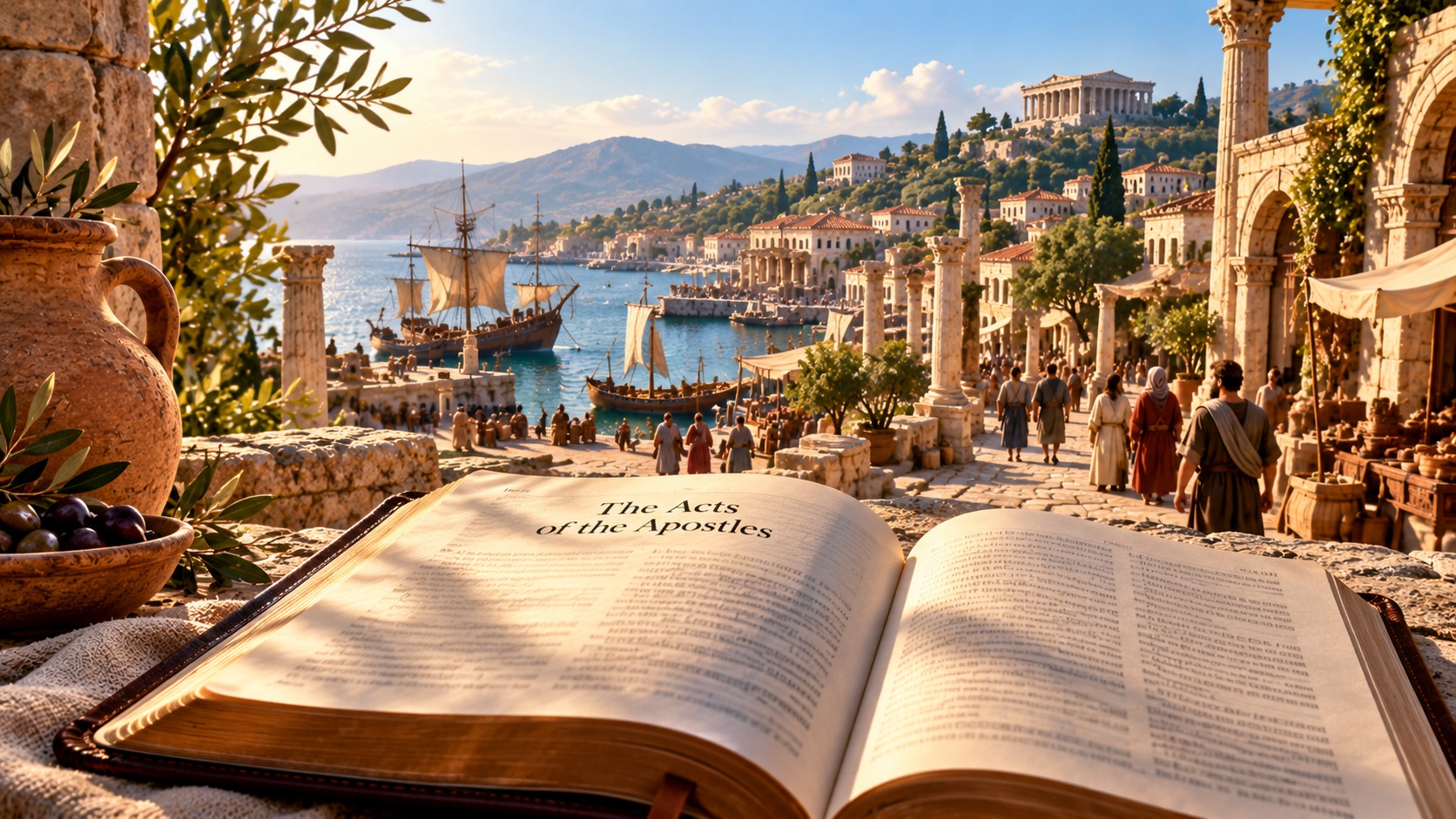
Sometimes understanding the world around a biblical story helps us see the story itself more clearly.
For many of us, the people and places of the New Testament are familiar. We know Paul and Timothy. We recognize Priscilla and Aquila. We have read about Ephesus, Antioch, Corinth, and Rome.
But familiarity can sometimes hide how distant their world really is from ours.
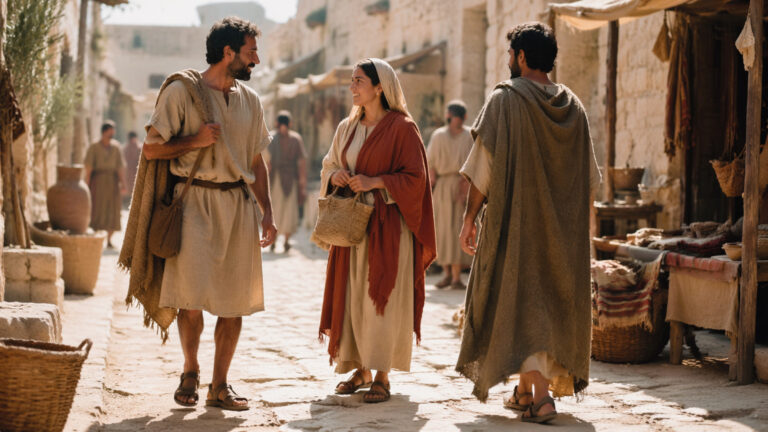
We read a few verses about a journey and forget how long the road might have been. We read that Paul sailed for another city without imagining the ship, the weather, the cargo, or the uncertainty of Mediterranean travel. We hear about believers gathering in a home without stopping to picture the household—or to wonder who else might have been living and working there.
The words of Scripture remain the same. But the world surrounding those words can easily disappear.
That is one reason historical fiction can be helpful.
Putting the World Back Around the Words
One of our motivations for writing the Nightingale Mountain Trilogy was a desire to encourage biblical literacy.
We did not mean simply knowing more Bible facts.
We wanted readers to become more familiar with the people, places, events, and circumstances of the New Testament—and perhaps to return to Scripture with a fuller sense of the world in which those events occurred.
Historical fiction has an unusual ability to help with that.
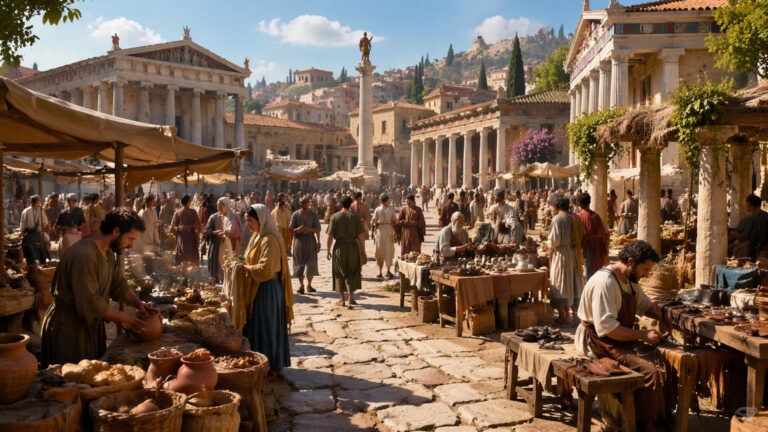
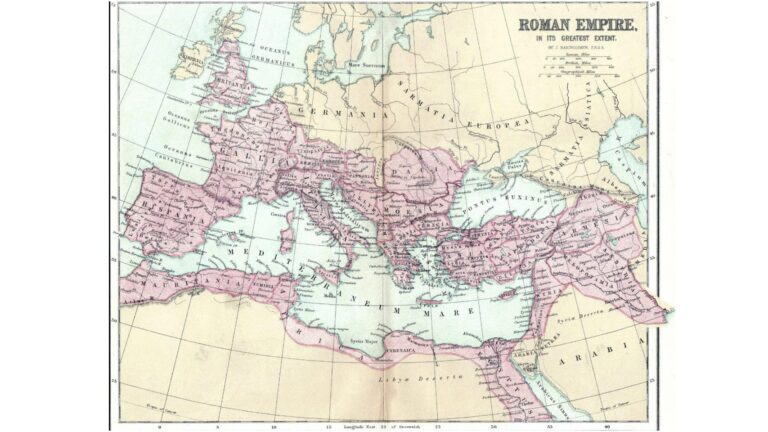
A map can show us the distance between Ephesus and Rome. History can tell us how Roman roads were constructed or how Mediterranean trade worked. Archaeology can help us understand the houses, marketplaces, temples, and cities of the first century.
Story can ask us to walk through that world.
Suddenly a road has dust. A harbor has noise. A household has relationships. A journey has delays and dangers. A Roman official has authority. And a small gathering of Christians exists within a much larger world that does not necessarily understand what they believe.
None of that replaces Scripture.
It gives us a setting in which to hear Scripture.
Between the Verses
The Bible often moves very quickly.
Acts may tell us that someone traveled from one city to another and then immediately take us to what happened when he arrived. Years can pass in a handful of chapters. People appear briefly and disappear again.
That is appropriate to the purpose of Scripture. But it leaves spaces that historical fiction can explore.
What might daily life have been like for a family living in one of those cities? What did travel feel like? How did people earn their living? What happened around the table? What did it mean to live under Roman authority while belonging to a community whose deepest allegiance was to Christ?
These are some of the questions that lie behind the Nightingale Mountain Trilogy.
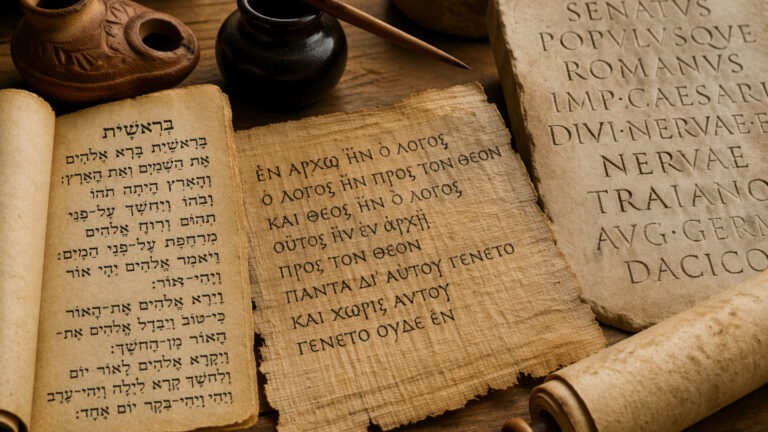
They are also questions we have explored on this blog: Roman roads and sea lanes, ships and houses, clothing and work, languages and citizenship, persecution and the people who traveled alongside Paul.
Each adds another piece to the world of the New Testament.
The novels attempt something similar through story.
Knowing Where the Story Fits
There is an important distinction whenever historical fiction enters the biblical world.
Scripture is Scripture. Fiction is fiction.
When the biblical record tells us something, that record sets the boundaries. Historical research can help us understand the setting. But beyond those boundaries, a novelist imagines.
Characters may be invented. Conversations may be imagined. The details of an ordinary day may have to be reconstructed from what is known about the period.
For us, the purpose of that imagination is not to replace the biblical story. It is to help readers enter its world.
Perhaps a reader encounters Ephesus in a novel and wants to know more about Ephesus in Acts. Timothy becomes more than a familiar name, and the reader returns to Paul’s letters to him. Priscilla and Aquila appear in a story, and suddenly the reader notices where they appear in the New Testament and begins following their movements from city to city.
That may be one of the best things biblical historical fiction can accomplish.
The novel has not replaced the Bible. It has sent the reader back to it.
A CHURCH THAT LEARNED TO GIVE
There was another sign that Antioch had become something more than a distant collection of new believers.
When a prophet named Agabus warned of a coming famine, the disciples in Antioch decided to provide help for believers in Judea. They sent their gift through Barnabas and Saul.
The direction is worth noticing.
Jerusalem had sent Barnabas to Antioch to encourage a young congregation.
Now Antioch was sending Barnabas and Saul back to Jerusalem carrying help.
The newer church was supporting the older one.
In The Vigil, this becomes another part of Saul’s conversation with Judith. He explains that both Jewish and Gentile believers had contributed to the offering and that he and Barnabas had been entrusted with bringing it to the Jerusalem leaders.
Once again, a few verses in Acts become personal.
There were people behind that offering—people deciding what they could give, people trusting Barnabas and Saul to carry it, and people in Judea who would eventually receive it.
Antioch was already discovering that belonging to the church meant belonging to people beyond Antioch.
When the Biblical World Becomes a Place
Biblical literacy is sometimes measured by how many names, books, or events someone can identify. Those things matter. But there is another kind of familiarity that grows when we begin seeing how the pieces belong together.
Paul’s letters were written to real communities in real cities. Acts unfolded across an actual geography. The people whose names we encounter lived within households, economies, governments, religious traditions, and cultures.
Knowing more about that world can change the way we read.
Ephesus is no longer merely a name in Acts. Antioch becomes more than another stop on a map. A journey is no longer simply a line between two points. A house church is no longer an abstract idea.
The biblical world begins to acquire texture.
And sometimes, when that happens, a passage we have read many times invites us to stop and look again.
Author Note
At St. Hans Books, we describe our purpose as publishing Christian historical fiction that brings the early Church to life and draws readers back to the Bible. That hope has been part of the Nightingale Mountain Trilogy from the beginning.
If a story makes the biblical world a little more understandable—and leaves a reader wanting to open Acts or one of Paul’s letters and discover more—then the story has accomplished something important to us.
Featured Reading
If you enjoy exploring the historical world behind the New Testament, we invite you to continue the journey through the Nightingale Mountain Trilogy. The novels bring to life the people, places, and everyday realities of the first-century church, where history and faith meet through story.
Explore More
You can explore related posts across the remaining areas of the St. Hans blog: Nightingale Mountain Trilogy, Ministry & Church Leadership, Updates & Releases.
Written by D. D. Shiell — Author of the Nightingale Mountain Trilogy
Frequently Asked Questions
What is Christian historical fiction?
Christian historical fiction is a genre that combines historical settings and storytelling with themes related to faith, spiritual life, and the lived experiences of people shaped by religious belief.
What are some popular settings for Christian historical fiction?
Common settings include biblical times, the Roman Empire, the early church, medieval Europe, the Reformation, and various periods of modern history.
Why do readers enjoy Christian historical fiction?
Many readers enjoy the combination of immersive history, emotionally grounded storytelling, spiritual themes, and meaningful human questions explored through another time and place.
What makes early church historical fiction unique?
Stories set in the early church world often combine Roman history, biblical context, cultural tension, persecution, travel, and the spread of Christianity throughout the Mediterranean world.
What is the Nightingale Mountain Trilogy about?
The Nightingale Mountain Trilogy is a Christian historical fiction series set in the first-century Roman world, exploring the lives of families and communities connected to the growth of the early church.