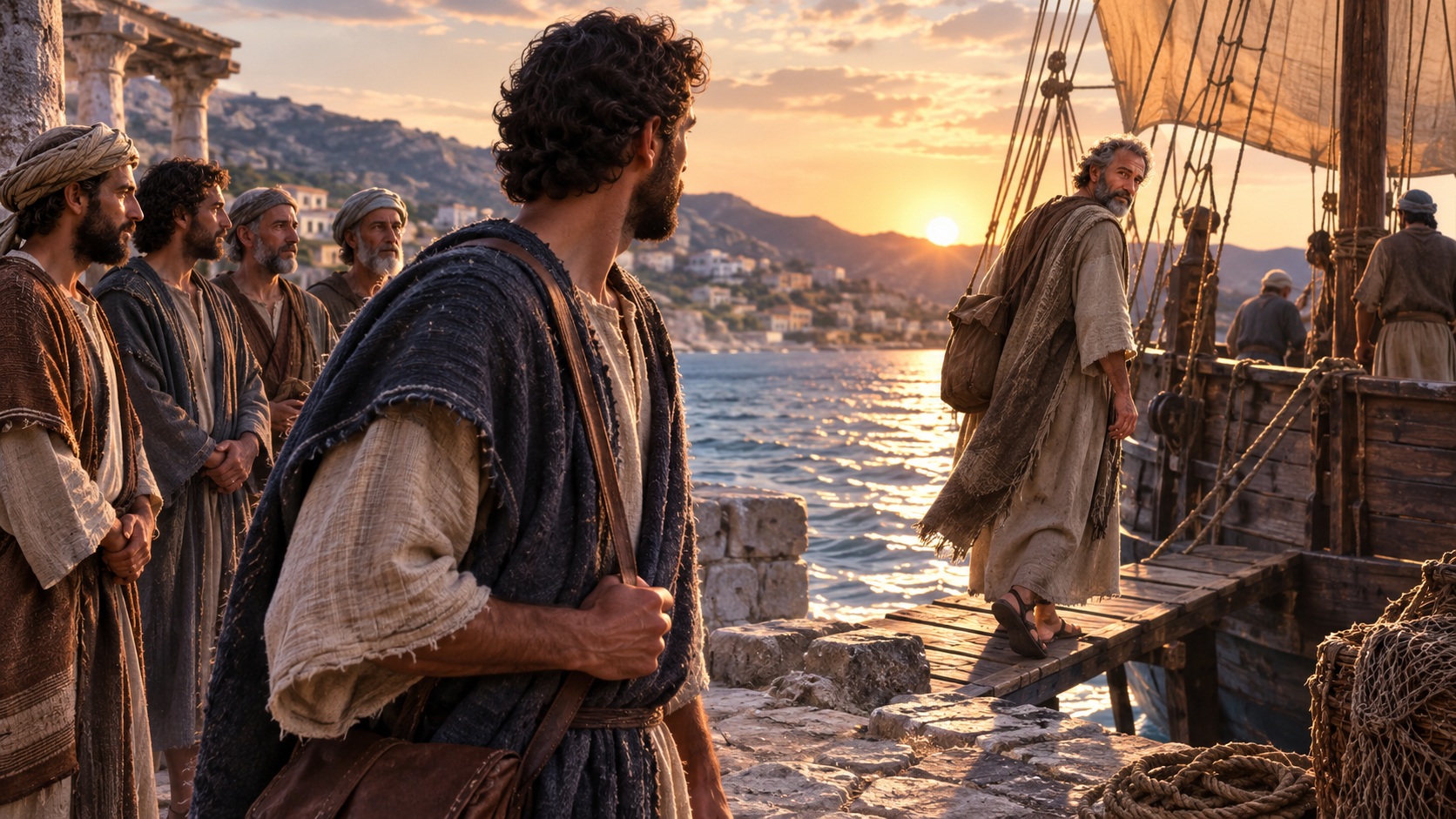
The New Testament gives us only glimpses of Titus, but those glimpses reveal a man Paul trusted with some of the most difficult work of the early church.
Some people in the New Testament appear for only a few moments yet seem to be present whenever something important—and difficult—needs to be done.
Titus was one of those people.
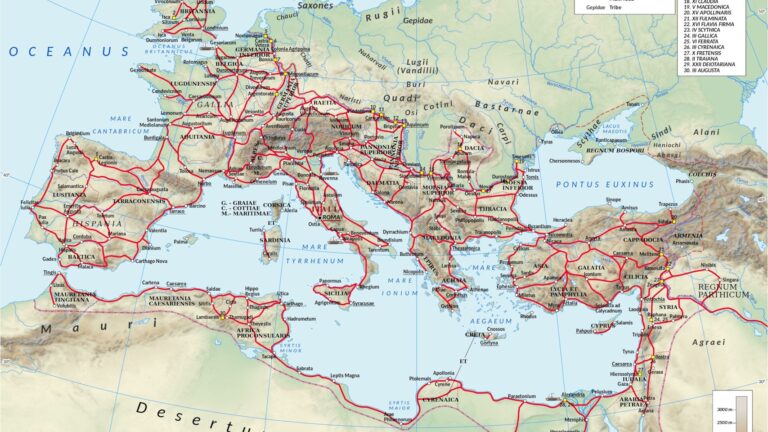
He traveled with Paul. He carried messages. He entered troubled situations. Paul trusted him with the church in Corinth and later left him on the island of Crete, where young Christian communities needed leadership, stability, and direction.
By the time we meet Titus in The Legacy, Book 3 of the Nightingale Mountain Trilogy, we wanted readers to encounter the man suggested by those scattered biblical references: not simply Paul’s traveling companion, but someone Paul had learned he could trust.
The Man Paul Could Send
Titus never appears in the Book of Acts, which makes his importance easy to overlook. But Paul’s letters tell another story.
Titus was a Gentile believer who accompanied Paul and Barnabas to Jerusalem. Paul specifically tells us in Galatians that Titus, though Greek, was not compelled to be circumcised.
That seemingly small detail places Titus near the center of one of the great questions facing the earliest followers of Jesus: Did Gentiles first have to become Jews in order to belong fully to the people of God?
Titus himself became part of the answer.
He was a Gentile who belonged.
Later, during Paul’s troubled relationship with the church in Corinth, Titus appears again. Paul trusted him to enter a difficult situation there, and Titus returned with encouraging news. Paul describes him not merely as a messenger but as his “partner and co-worker” among the Corinthians.
A pattern begins to emerge.
When circumstances were complicated, Titus was someone Paul could send.
Left Behind On Crete
That pattern becomes clearest in the New Testament letter bearing Titus’s name.
Paul writes:
“The reason I left you in Crete was that you might put in order what was left unfinished and appoint elders in every town.”
— Titus 1:5
The assignment tells us a great deal about the relationship between the two men.
Paul was leaving.
Titus was staying.
The Christian communities on Crete were not finished products. They needed leaders. They faced false teaching and arguments. Paul was concerned about behavior within the churches and about the reputation of believers among the people around them.
So Titus was not being left behind simply to preach.
He was being entrusted with people.
Paul instructed him about the character required of elders, the teaching that should shape the churches, relationships between generations, conduct within households, divisive controversies, and the importance of doing what is good.
Again and again, the Letter to Titus connects what Christians believe with how Christians actually live.
That is the difficult place in which Titus was asked to serve.
When the Letter Becomes a Story
This is one of those places where biblical fiction can do something different from either a Bible commentary or a history book.
The Letter to Titus tells us that Paul left Titus in Crete.
But imagine living that sentence.
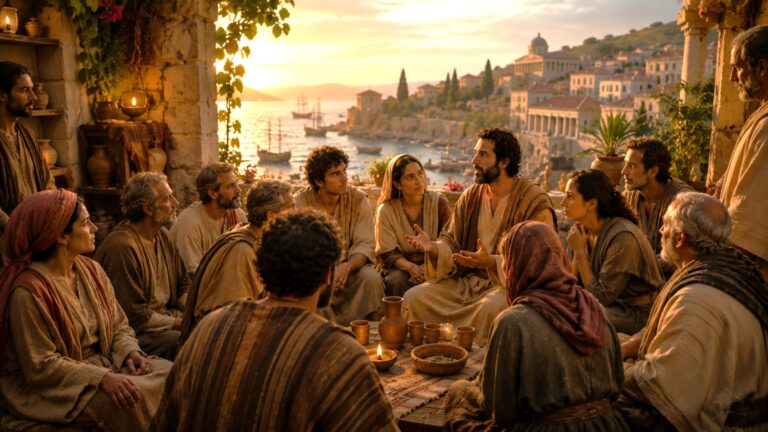
In The Legacy, Paul and Titus travel from town to town across Crete, encountering young congregations struggling with disagreements, competing teachings, and the habits of the surrounding culture.
As they walk along the shore one evening, Titus recognizes how difficult their work will be. Paul responds by emphasizing the need for leaders whose lives offer a different example.
Eventually Paul must leave.
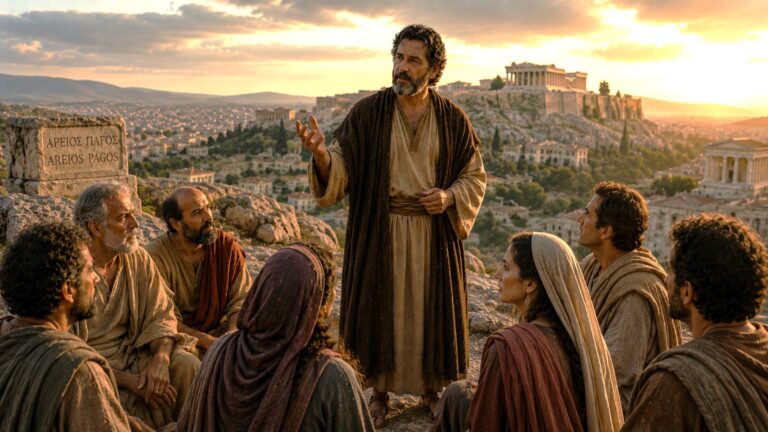
He gathers Titus and the newly appointed leaders and tells them that the work is far from finished. At the harbor, Paul entrusts the churches to the man who will remain after his ship disappears beyond the horizon.
The novel does not change the biblical assignment.
It asks us to stand beside Titus when he receives it.
What did it mean to remain when Paul left?
What did it feel like to become responsible for churches that were still learning what following Jesus required?
What happens the next morning, when the apostle is gone and Titus must begin the work himself?
Those are the spaces where biblical fiction comes alive.
“Show Yourself An Example”
Perhaps one sentence in Paul’s letter captures the responsibility better than any other:
“In everything set them an example by doing what is good.”
— Titus 2:7
Paul could give Titus instructions. He could send him a letter. He could tell him what qualifications to seek in leaders and what problems needed correction.
But Titus ultimately had to live among these people.
His authority could not depend forever upon saying, “Paul told me.”
His life had to support the message he carried.
That helps explain why Titus was so valuable to Paul. The New Testament does not remember him for a famous sermon, a dramatic miracle, or a theological argument bearing his name.
We remember him because Paul trusted him.
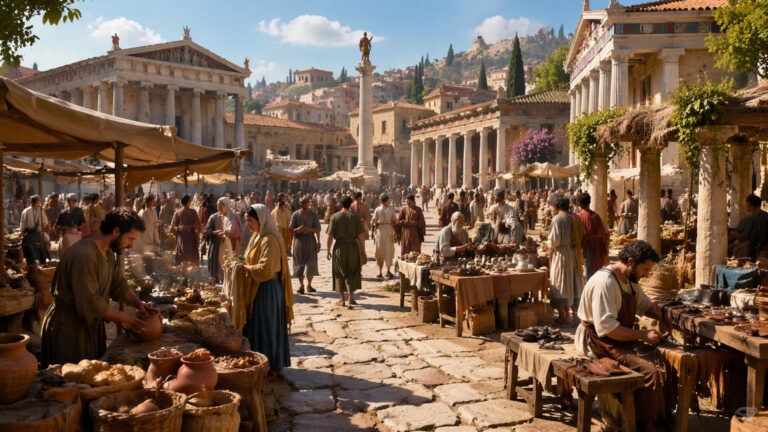
In The Legacy, that trust continues beyond Crete. Paul later summons Titus to Nicopolis, where Titus reports that the Cretan churches are growing even while false teaching remains a problem. His experience organizing churches then becomes valuable as the believers in Nicopolis begin forming a community of their own.
And eventually Titus returns to Crete.
The difficult work continues.
Responsibility In Difficult Places
There is something wonderfully ordinary about Titus.
Paul traveled widely, preached publicly, wrote letters that would shape Christianity for centuries, and repeatedly found himself at the center of controversy.
Titus often seems to arrive afterward.
Someone has to remain.
Someone has to help select leaders.
Someone has to confront destructive teaching without destroying the community.
Someone has to encourage people who are still learning how their new faith changes the way they speak, work, worship, lead, disagree, and live together.
That kind of responsibility rarely produces the most dramatic stories.
But communities cannot survive without it.
Titus reminds us that the spread of the early church depended not only upon apostles who carried the Good News into new places, but upon trusted men and women willing to stay and help those communities grow.
Author Note
As we wrote The Legacy, Titus gave us an opportunity to bring the biblical record and historical imagination especially close together. The Letter to Titus provided the framework: Paul, Crete, unfinished work, emerging leaders, false teaching, and Christian lives meant to reflect the Good News they proclaimed. Biblical fiction allowed us to enter that framework and imagine Titus carrying the responsibility Paul placed in his hands.
Featured Reading
If you enjoy exploring the historical world behind the New Testament, we invite you to continue the journey through the Nightingale Mountain Trilogy. The novels bring to life the people, places, and everyday realities of the first-century church, where history and faith meet through story.
Explore More
You can explore related posts across the remaining areas of the St. Hans blog: Nightingale Mountain Trilogy, Ministry & Church Leadership, Updates & Releases.
Frequently Asked Questions
What is Christian historical fiction?
Christian historical fiction is a genre that combines historical settings and storytelling with themes related to faith, spiritual life, and the lived experiences of people shaped by religious belief.
What are some popular settings for Christian historical fiction?
Common settings include biblical times, the Roman Empire, the early church, medieval Europe, the Reformation, and various periods of modern history.
Why do readers enjoy Christian historical fiction?
Many readers enjoy the combination of immersive history, emotionally grounded storytelling, spiritual themes, and meaningful human questions explored through another time and place.
What makes early church historical fiction unique?
Stories set in the early church world often combine Roman history, biblical context, cultural tension, persecution, travel, and the spread of Christianity throughout the Mediterranean world.
What is the Nightingale Mountain Trilogy about?
The Nightingale Mountain Trilogy is a Christian historical fiction series set in the first-century Roman world, exploring the lives of families and communities connected to the growth of the early church.
Written by D. D. Shiell — Author of the Nightingale Mountain Trilogy