
How does one life, shaped by conviction, suffering, and purpose, come to influence generations far beyond its own time?
The question of who was the apostle Paul reaches far beyond a single figure in history. His life unfolded within the vast world of the Roman Empire, yet his influence spread far beyond the roads he traveled and the cities where he taught. Across cultures, languages, and communities, his story became intertwined with the growth of the early church and the spread of the message of Jesus.
For many, Paul is known as a missionary, a writer, or a central figure in the New Testament. But before all of this, his life began within the traditions of Judaism, shaped by learning, devotion, and a deep commitment to the Scriptures of Israel. The story that followed would become, in Paul’s understanding, part of the unfolding work of God in the world.
Who Was the Apostle Paul and Why Does He Matter?
Paul remains one of the most influential figures in the history of Christianity, not only because of where he traveled, but because of what he believed God was doing through the life, death, and resurrection of Jesus.
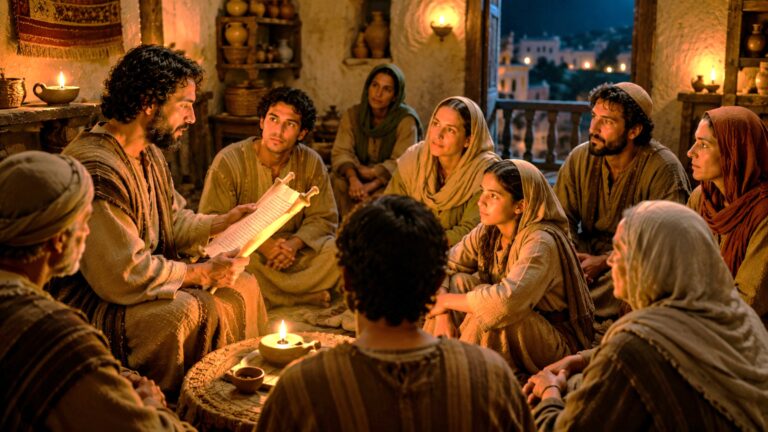
His letters, written to communities across the Roman world, helped shape how early believers understood faith, salvation, grace, reconciliation, and life together as the people of God. Through these writings, readers encounter not only theology, but the struggles, hopes, and questions of ordinary people trying to live faithfully within a complicated world.
To understand Paul is also to better understand the world of the early church — a world marked by tension, diversity, persecution, and hope. The first followers of Jesus believed they were witnessing the beginning of something new: the spread of God’s kingdom across boundaries that had long divided people.
The Life of Paul: From Saul of Tarsus to Christian Apostle
Paul was born as Saul of Tarsus, a city known for learning, trade, and cultural influence. Raised within Jewish tradition and trained as a Pharisee, he was deeply devoted to preserving what he believed to be true and faithful before God.
Before becoming an apostle, Saul actively opposed early followers of Jesus. He viewed the growing movement surrounding Jesus as dangerous and misguided. Yet everything changed during his journey to Damascus.
According to Acts, Saul encountered a vision of the risen Jesus on the road — an experience that left him blinded and transformed. Paul later described this moment not simply as a change of opinion, but as a revelation that reshaped the purpose of his life. The message he once resisted became, in his eyes, the very work of God unfolding in the world.
This experience did not erase Paul’s Jewish identity or the Scriptures that had formed him. Instead, he came to believe that the promises of God were being fulfilled through Jesus and extended outward to both Jews and Gentiles.
From that point forward, Paul’s life became marked by both mission and suffering. He traveled constantly, faced imprisonment and opposition, and endured hardship across many years. Yet throughout his letters and the account found in Acts, he repeatedly expressed confidence that God had called him for a purpose greater than his own comfort or safety.
Paul’s Missionary Journeys Through the Roman Empire
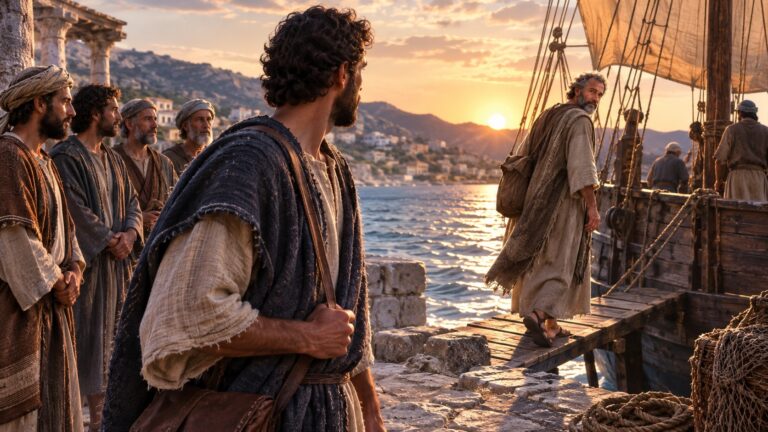
Paul’s journeys carried him across some of the most significant cities of the Roman world — Antioch, Ephesus, Corinth, Philippi, and eventually Rome. These cities formed part of a connected world shaped by trade, language, military power, and movement across long Roman roads and sea routes.
Travel in this world required endurance. Storms, shipwrecks, dangerous roads, political unrest, and imprisonment were constant realities. Yet Paul continued to move from place to place, establishing communities of believers and returning to strengthen them through teaching, encouragement, and letters.
For Paul, these journeys were more than travel or religious expansion. He believed God had entrusted him with carrying the Good News of Jesus across cultural and geographic boundaries. The book of Acts describes moments when visions, prayers, and the guidance of the Holy Spirit encouraged and directed him during times of danger, uncertainty, and exhaustion.
These missionary journeys became part of the larger story of how the early church spread throughout the Roman Empire.
Understanding Pauline Christianity and the Letters of Paul
Paul’s letters remain one of the most enduring parts of his legacy. Written to real communities facing real challenges, they addressed conflict, suffering, division, forgiveness, generosity, and the struggle to live faithfully in everyday life.
What is often called Pauline Christianity reflects themes that appear throughout these writings: grace, faith, salvation, reconciliation, and the creation of a new kind of community centered on Jesus. Paul believed that through Jesus, God was gathering people from many nations into one people shaped not by power or status, but by love, humility, and hope.
These ideas emerged from the world Paul inhabited. Jews and Gentiles struggled to understand one another. Social divisions shaped daily life. The Roman Empire promised peace through power and control. Against this backdrop, Paul proclaimed what he understood to be the kingdom of God — a different vision of human life rooted in reconciliation with God and with one another.
His letters continued to guide Christian communities long after his death and remain central to Christian faith today.
How the Apostle Paul Died and the Legacy He Left Behind
Paul’s life eventually brought him to Rome, where he lived under guard and continued teaching about Jesus. While the exact details of his death are not fully recorded in Scripture, early Christian tradition holds that he was executed during the reign of Emperor Nero.
His death did not end the movement he helped nurture. The communities he encouraged continued to grow, and his writings remained in circulation across the Christian world.
More than anything, Paul’s legacy rests in the enduring belief that God continues to work through imperfect people, difficult circumstances, and communities bound together by faith and hope. His story became part of the larger story early Christians believed God was writing in the world — a story of redemption, endurance, and new creation.
Why This Still Matters
Paul’s story continues to resonate because it speaks to questions that remain deeply human: Can a life change direction? Can suffering carry purpose? Can divided people become a community? Can hope survive in uncertain times?
For believers, Paul’s life reflects the transforming power of God and the spread of the Good News across cultures and generations.
For others, his story remains a window into one of history’s most influential movements and the lives of ordinary people who believed they were participating in something larger than themselves.
In either case, Paul’s life reminds us that ideas alone rarely shape history. People do — people shaped by conviction, sacrifice, vision, and hope.
Author Note
As we reflected on Paul’s life, we were reminded how closely the story of the early church is tied to real journeys, real communities, and real struggles. These connections shaped how we imagined and wrote the world of the the Nightingale Mountain Trilogy.
Explore More
You can explore related posts across the remaining areas of the St. Hans blog: Faith & History, Behind the Books, Author Journey, Updates & Releases.
Written by D. D. Shiell — Authors of the Nightingale Mountain Trilogy
Frequently Asked Questions
Who was the apostle Paul before his conversion?
Before becoming Paul, he was known as Saul of Tarsus, a Pharisee who actively opposed early followers of Jesus.
How many books of the Bible did Paul the apostle write?
Paul is traditionally credited with writing 13 letters in the New Testament, though some are debated among scholars.
What were Paul’s missionary journeys and where did he travel?
Paul traveled throughout the Roman Empire, including regions such as Asia Minor, Greece, and Rome, establishing early Christian communities.
How did the apostle Paul die?
Paul is believed to have been executed in Rome, likely by beheading, during the reign of Emperor Nero.
What is Pauline Christianity and how does it differ from other early Christian thought?
Pauline Christianity refers to the teachings found in Paul’s letters, especially themes of grace, faith, salvation, and the inclusion of Gentiles within the people of God.