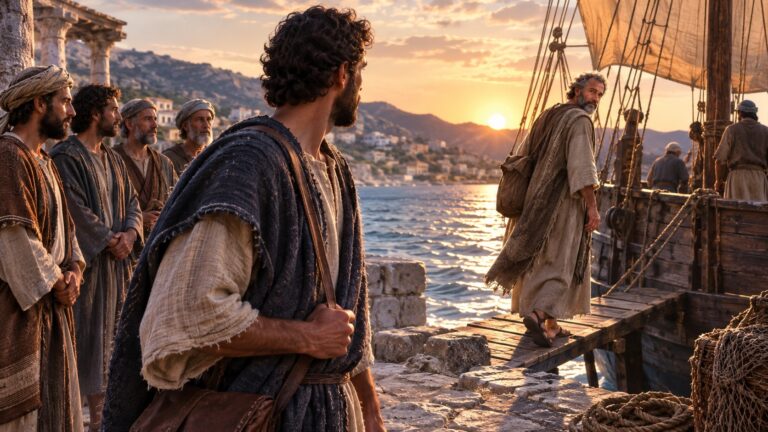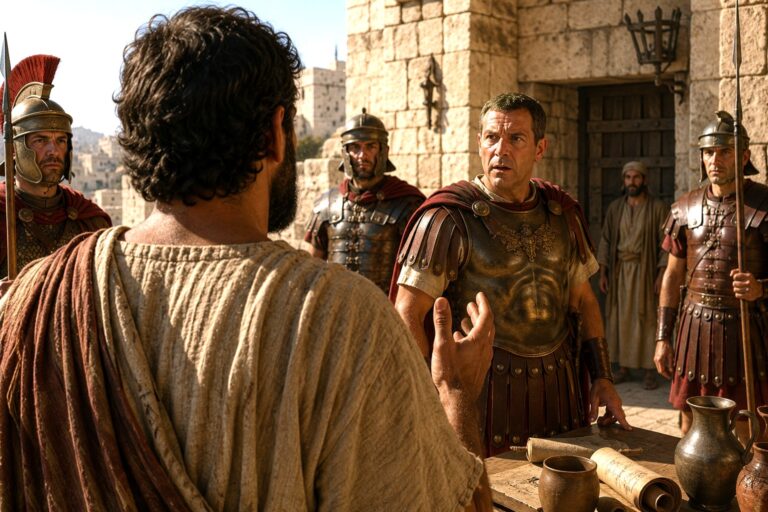
The early church did not emerge from isolation, but from the daily work of ordinary men and women.
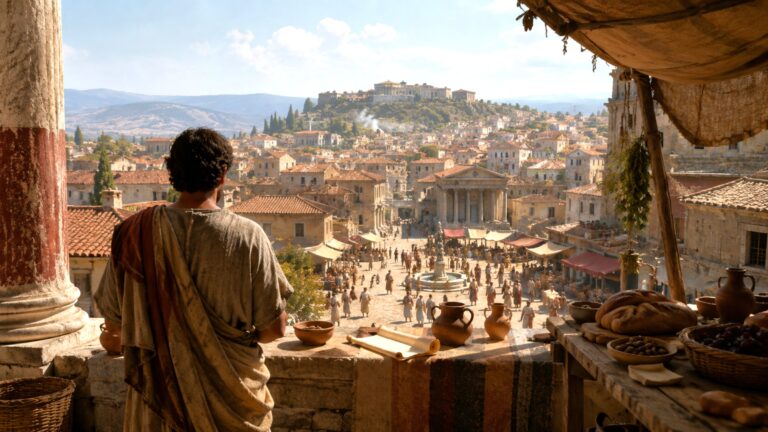
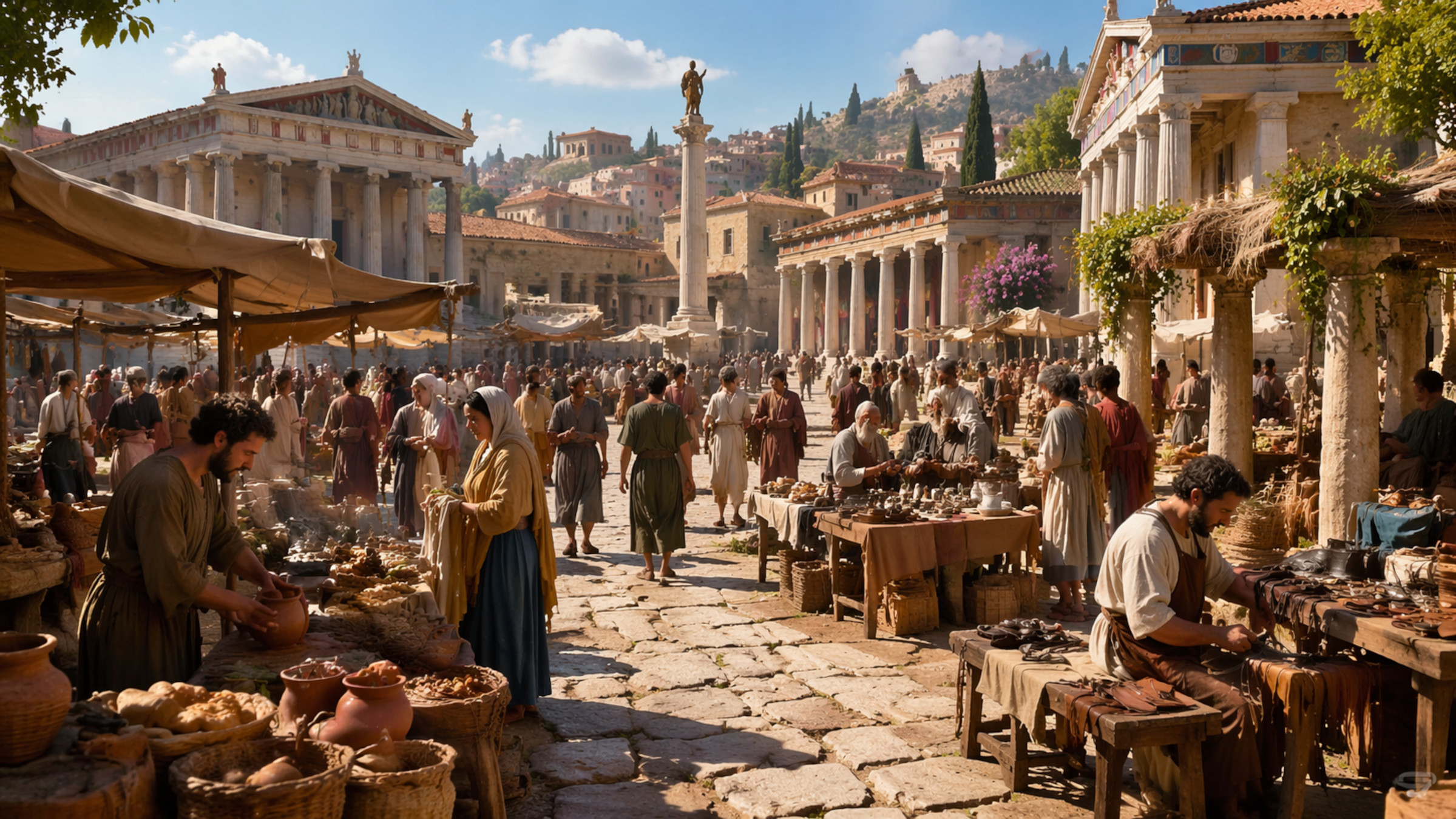
The cities of the first century were alive with activity. In places like Ephesus, Corinth, and Antioch, the rhythm of life was shaped not by quiet reflection but by labor—hands at work, goods in motion, voices in negotiation.
To understand the early church, we must picture not only gatherings and teachings, but workshops, marketplaces, and long days of effort.
A World of Skilled Hands
Work in the Roman world was diverse and deeply practical. Most people earned their living through trades that required skill, endurance, and consistency.
Artisans shaped wood, leather, and metal. Potters formed vessels for homes and markets. Weavers produced garments from wool and linen. Fishermen supplied daily food, while merchants carried goods across cities and seas.
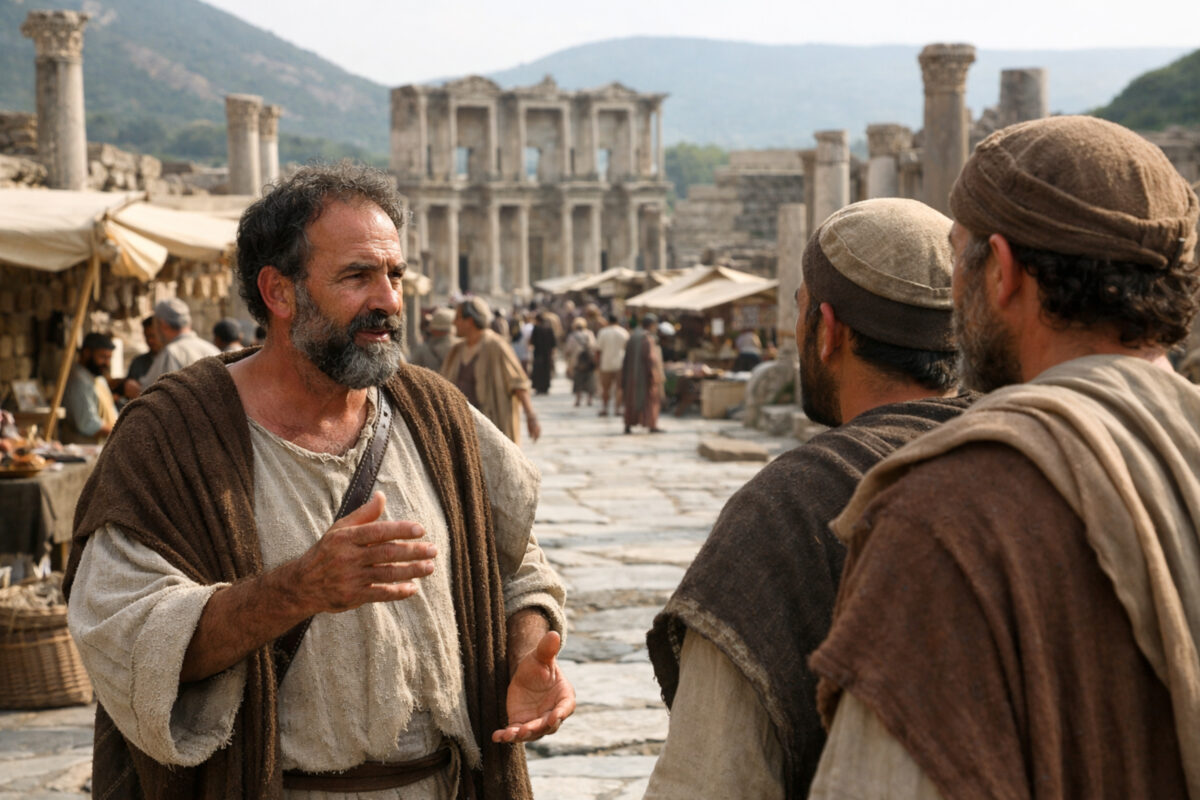
In large cities like Ephesus, much of this activity centered in the agora, the public marketplace where trade, conversation, and daily life intersected. Entire sections of the agora were often associated with particular trades, creating a steady rhythm of work and interaction.
The marketplace was not only a place of commerce but a center of conversation and connection.
For most, work was not a path to advancement, but a necessity for survival. Each day’s labor sustained that day’s needs.
Guilds, Identity, and Pressure
Many trades were organized into guilds or associations. These groups offered support, protection, and shared identity—but often came with expectations.
Guild gatherings could include meals, social obligations, and participation in religious practices tied to local gods or imperial worship. For followers of Jesus, this created tension.
To belong to a trade could mean being asked to participate in practices that conflicted with their faith. To step away could mean losing both income and community. The decision to follow Jesus was not abstract. It could affect one’s livelihood, relationships, and place in society.
Paul’s Trade and Daily Life
Paul the Apostle is often remembered for his letters and journeys, but he was also a craftsman.
He worked as a tentmaker—likely involving leatherworking or the production of heavy fabric coverings used for shelter and trade. This was skilled, demanding work.
In cities like Corinth, Paul labored alongside others such as Priscilla and Aquila. His work supported his travels and allowed him to share the Good News without placing a burden on the communities he served. His example reveals something essential: teaching and labor were not separate worlds. They were woven together.
The message of Jesus moved not only through sermons, but through shared workspaces, daily interactions, and conversations that often began in places like the agora.
Work, Dignity, and the Spread of the Good News
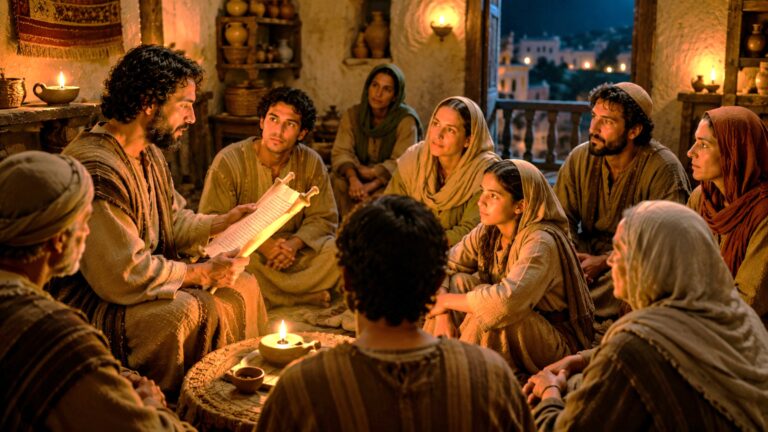
The early church grew among artisans, traders, and laborers. It spread through conversations in workshops, along trade routes, and within households shaped by daily work.
Faith did not remove people from their trades. It was part of their everyday life, at work as well as at home.
A craftsman shaping leather, a merchant negotiating a sale, a laborer carrying goods—all became part of the setting where the Good News was heard and lived.
This grounded the message in ordinary life. It made the faith visible not only in gatherings, but in the steady rhythm of daily work.
Author Note
As we wrote about this world, we were reminded how much of life in the first century unfolded in places that rarely appear in formal accounts—shops, streets, and shared labor.
Explore More
You can explore related posts across the remaining areas of the St. Hans blog: Nightingale Mountain Trilogy, Ministry & Church Leadership, Updates & Releases.
Written by D. D. Shiell — Authors of the Nightingale Mountain Trilogy