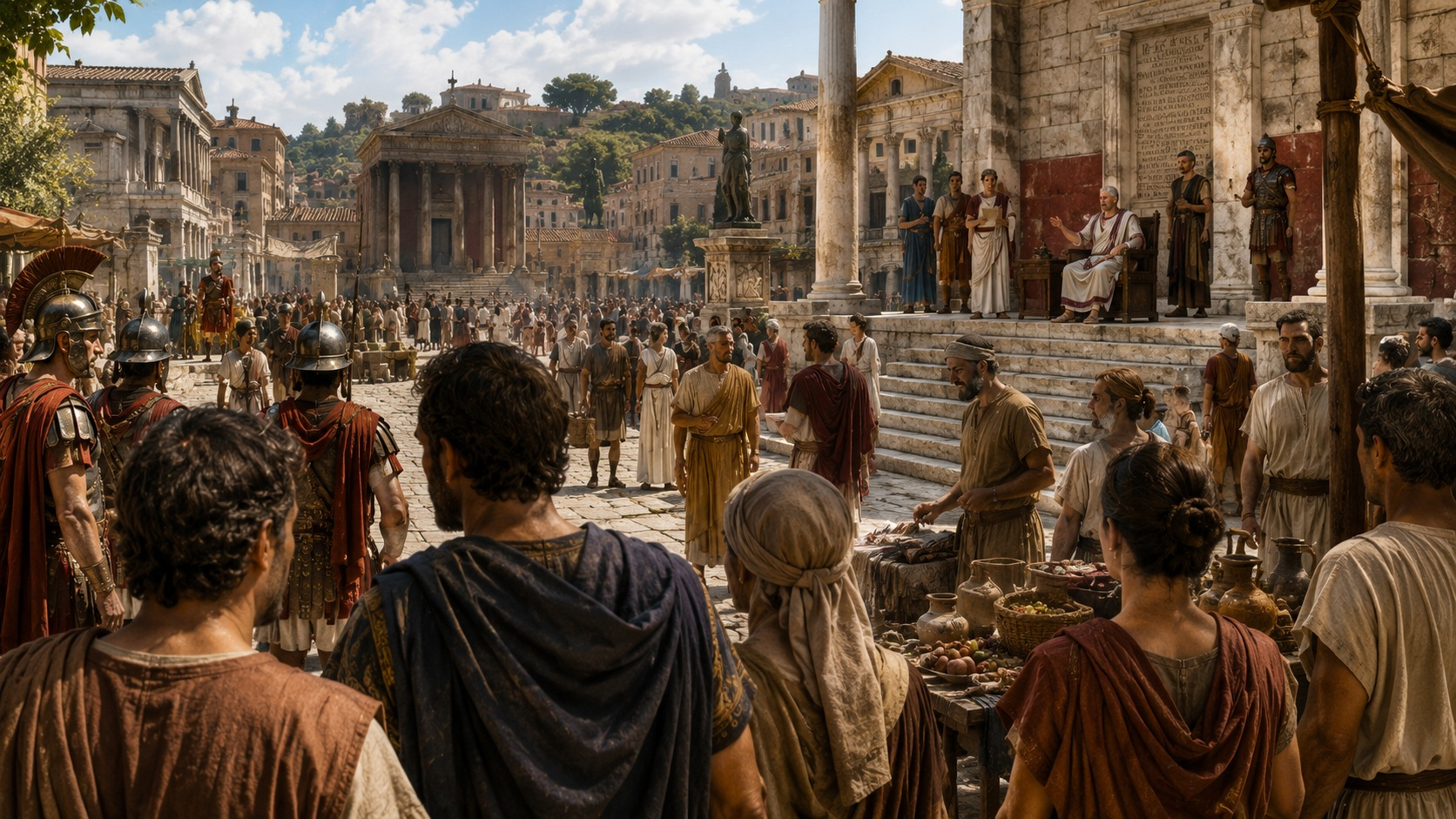
The first Christians lived in a world where nearly everyone answered to someone. Understanding that world helps us appreciate why the authority of Jesus sounded so different.
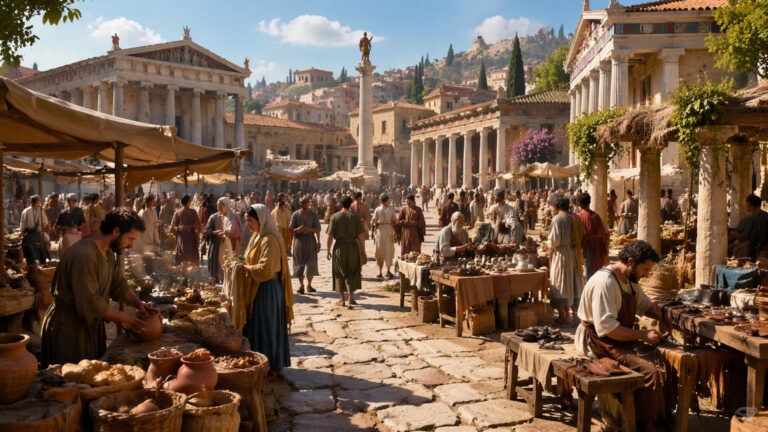
If you had walked through a Roman city in the first century, you probably would not have asked, Who is in charge?
The answer seemed obvious.
Everywhere you looked, someone held authority over someone else.
A father directed his household. A master supervised servants. A merchant answered to city officials. Soldiers obeyed their commanders. Governors represented the emperor. Priests oversaw religious life. Even tax collectors carried the authority of Rome.
Most people rarely questioned the system.
The more important question was simply:
Who has the right to tell me what to do?
A World of Authority
Authority shaped almost every part of daily life.
It determined who could own property, collect taxes, hear legal disputes, command soldiers, or enforce the law. Cities functioned because people generally understood where authority rested and what was expected of them.
This hierarchy reached into the home as well as the marketplace.
Children obeyed parents.
Apprentices learned from masters.
Workers answered to employers.
Citizens respected magistrates.
Each relationship carried both responsibility and accountability.
For most people, this was simply how society worked.
Order brought stability.
And stability allowed the empire to flourish.
When Authority Failed
Not everyone used authority wisely.
Some governors governed with fairness.
Others ruled through fear.
An honest magistrate could protect the innocent.
A corrupt official could exploit the vulnerable.
Roman soldiers might defend travelers from bandits one day and enforce an unjust order the next.
The problem was never authority itself.
The problem was what people chose to do with it.
The first Christians understood both sides of that reality. They benefited from just officials at times, yet they also experienced imprisonment, intimidation, and persecution when those in power sought to silence them.
Then Jesus Entered the Conversation
Into this world came Jesus.
People were astonished by His authority.
Not because He held political office.
Not because He commanded an army.
Not because Rome recognized Him.
Again and again the Gospels tell us that people were amazed because He taught “as one who had authority.”
His authority looked different.
He healed instead of threatening.
He forgave instead of condemning.
He served instead of demanding privilege.
Even a Roman centurion recognized something remarkable in the authority Jesus possessed.
It was unlike anything the empire could offer.
Choosing Whom to Follow
The earliest Christians still lived under Roman authority.
They paid taxes.
Worked ordinary jobs.
Raised families.
Respected governing officials.
Yet they also believed there were moments when obedience to God required courage in the face of earthly power.
That conviction did not make them rebels.
It simply meant they recognized that every human authority had limits.
Above every throne, every governor, every magistrate, and every emperor stood the authority of God.
Why This Still Matters
We still live among layers of authority.
Parents, employers, teachers, community leaders, governments, and churches all exercise influence over our lives.
Most of the time we hardly notice.
But sooner or later everyone encounters the question the first Christians faced:
Who ultimately has the right to tell me how to live?
The New Testament does not dismiss earthly authority.
It places it in perspective.
The first followers of Jesus respected those who governed them, yet they discovered that their highest allegiance belonged to God alone.
Understanding authority in the Roman world also helps us understand what happened when earthly authority and Christian faith eventually came into conflict—a subject we will explore in our next article.
Author Note
As we wrote the Nightingale Mountain Trilogy, we are continually reminded that the drama of the early church did not unfold only in synagogues and homes. It unfolded in a world structured by authority—within families, cities, governments, and the Roman Empire itself. Understanding those relationships helps us better appreciate both the courage and the quiet faithfulness of the first Christians.
Featured Reading
If you enjoy exploring the historical world behind the New Testament, we invite you to continue the journey through the Nightingale Mountain Trilogy. The novels bring to life the people, places, and everyday realities of the first-century church, where history and faith meet through story.
Explore More
You can explore related posts across the remaining areas of the St. Hans blog: Nightingale Mountain Trilogy, Ministry & Church Leadership, Updates & Releases.
Frequently Asked Questions
What is Christian historical fiction?
Christian historical fiction is a genre that combines historical settings and storytelling with themes related to faith, spiritual life, and the lived experiences of people shaped by religious belief.
What are some popular settings for Christian historical fiction?
Common settings include biblical times, the Roman Empire, the early church, medieval Europe, the Reformation, and various periods of modern history.
Why do readers enjoy Christian historical fiction?
Many readers enjoy the combination of immersive history, emotionally grounded storytelling, spiritual themes, and meaningful human questions explored through another time and place.
What makes early church historical fiction unique?
Stories set in the early church world often combine Roman history, biblical context, cultural tension, persecution, travel, and the spread of Christianity throughout the Mediterranean world.
What is the Nightingale Mountain Trilogy about?
The Nightingale Mountain Trilogy is a Christian historical fiction series set in the first-century Roman world, exploring the lives of families and communities connected to the growth of the early church.
Written by D. D. Shiell — Author of the Nightingale Mountain Trilogy