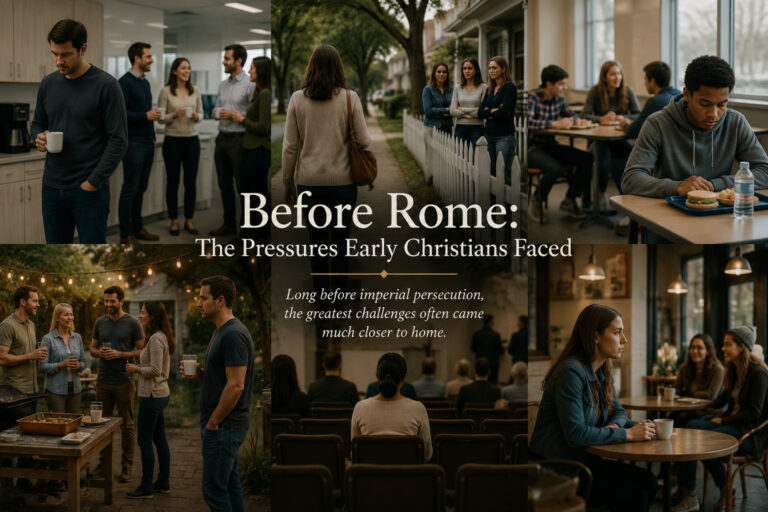
For the first Christians, telling someone about Jesus often meant starting at the beginning. Increasingly, that may be true for us as well.
Those of us who have lived around Christianity for most of our lives may have difficulty imagining what it is like to hear about Jesus for the first time. We already know how the story goes. We recognize the names, places, and events. Even someone who has never read the Bible may have grown up knowing something about Bethlehem, the disciples, the cross, and the resurrection.
But that background can no longer be assumed. There are people today for whom Jesus and Christianity are genuinely unfamiliar. Their questions may not be very different from the questions people asked when the Christian message first began moving through the Roman world.
That gives us an interesting way to look at the early church. What was it like when someone first arrived in Corinth, Ephesus, or Philippi and began talking about a Jewish teacher named Jesus? And what might that experience teach us about introducing Jesus to someone today?
HEARING THE STORY FROM SOMEONE ELSE
The book of Acts describes Paul traveling from city to city, speaking about Jesus in synagogues, public places, homes, and other settings. But Paul was only one person in a much larger movement. Other followers of Jesus traveled as well. Merchants moved between cities. Families relocated. Travelers stayed in people’s homes. Friends talked with friends.
Christianity spread along these human connections.
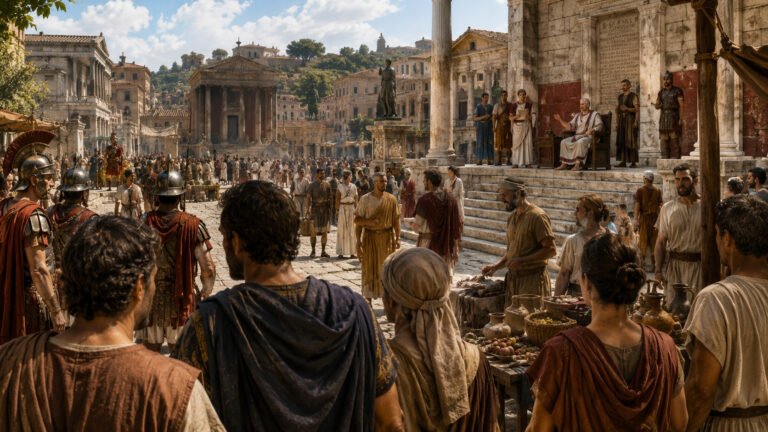
Imagine living in a city such as Corinth, Ephesus, or Philippi in the middle of the first century. Your world was filled with religions. Temples were part of the landscape. Festivals and sacrifices were woven into civic life. The Roman emperor represented political power, while local traditions and religions helped shape the identity of families and communities.
Then someone began telling you about a Jewish teacher named Jesus.
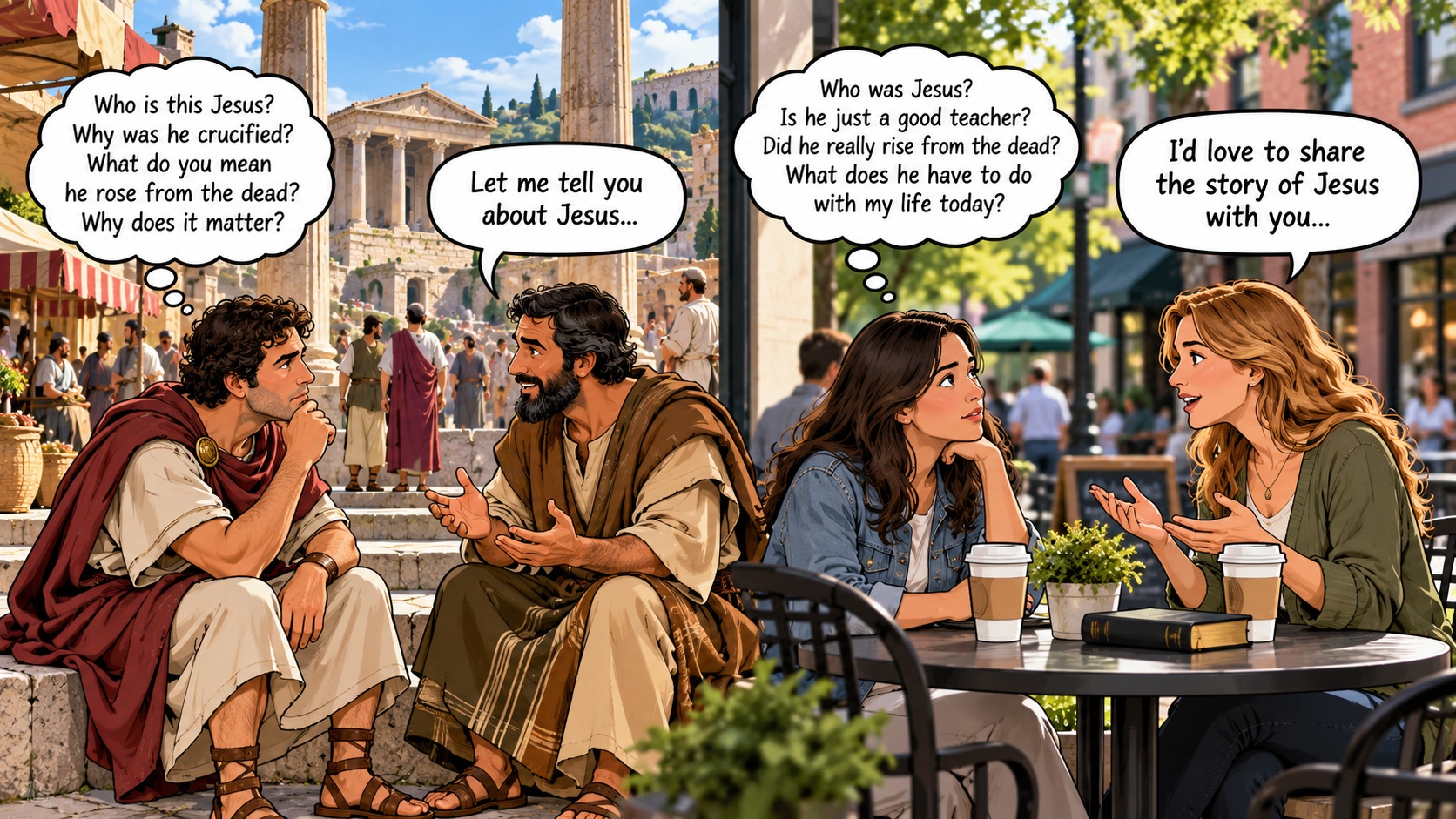
You would probably need some background before much of the story made sense. Who were the Jewish people? What were their Scriptures? What did they mean when they talked about a Messiah? Why was this Jesus crucified? Eventually you would encounter the remarkable claim at the heart of the Christian message: his followers believed that Jesus had risen from the dead.
None of this came with centuries of Christian familiarity attached to it. The person hearing the story had to decide whether it was interesting enough to keep listening.
WHY WOULD SOMEONE WANT TO KNOW MORE?
The spread of Christianity becomes especially interesting when we remember that those first hearers did not know where the story was going.
Today we look backward over two thousand years of Christian history. They could not. To someone living in the Roman Empire, this was a new movement associated with people from a relatively small province on the eastern edge of the empire.
Yet some people wanted to know more.
Acts gives us glimpses of very different people who became interested in the message. Some were Jewish. Others were Gentiles already attracted to Jewish belief. Still others came from very different religious backgrounds. As Christianity moved from one community to another, it crossed social, ethnic, economic, and geographic boundaries.
Not everyone responded in the same way. Some believed what they heard. Some wanted another conversation. Some rejected it. Others became hostile.
The first Christians therefore were not usually speaking to audiences that already agreed with them. They were telling people about Jesus and giving them reasons to keep listening.
That situation may not be as distant from ours as we sometimes think.
WHEN YOU DON’T HAVE THE NEW TESTAMENT
There was another major difference between the first hearers of the Christian message and those of us who encounter Christianity today. The earliest Christians did not possess the New Testament as we know it.
They had the Jewish Scriptures. They had the testimony of people who knew Jesus or knew those who had known him. They had teaching passed from one Christian community to another. As the movement grew, letters circulated among the churches. Accounts of the life and teaching of Jesus were preserved and eventually written down.
For many people, however, their introduction to Christianity began with another person.
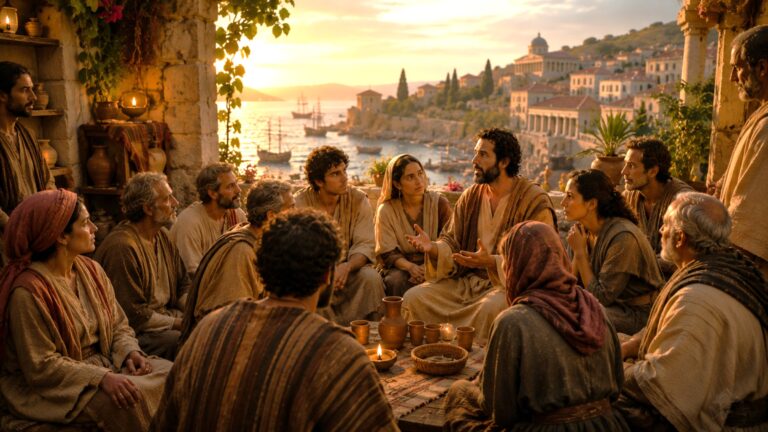
They met someone who followed Jesus. They heard the story. They asked questions and listened to the answers. They may have watched a group of Christians gathering in a home and wondered what held these people together.
Christianity was not simply a collection of ideas moving across a map. It spread through relationships and conversations between actual people.
That is an important part of the story because the same thing can happen today. Someone may own a Bible or have instant access to one on a phone and still know very little about Christianity. Access to information is not the same thing as understanding it.
Sometimes another person provides the context that makes someone want to know more.
STARTING WHERE PEOPLE ACTUALLY ARE
In last week’s article, we considered what happens when we can no longer assume that people know the Bible. One consequence is that Christians may increasingly find themselves in conversations that resemble, in at least one respect, those of the early church. We may be talking with someone for whom the Christian story is largely new.
That changes the starting point.
Someone who knows little about Christianity may not need a complicated theological explanation first. The person may simply want to know who Jesus was, what he taught, why he was crucified, why Christians believe he rose from the dead, and why any of that should matter two thousand years later.
Those are substantial questions, but they are also good questions.
Starting where someone actually is means allowing those questions to be asked without embarrassment. It means explaining unfamiliar language instead of assuming everyone understands it. It also means recognizing that a person may need time to think about what he or she is hearing.
The earliest Christians knew something about that. They spoke about Jesus to people who could listen, ask questions, disagree, come back for another conversation, or walk away.
WHY THIS STILL MATTERS
Christianity began in a world where most people were not Christians. That fact can be easy to overlook after centuries in which Christianity became deeply embedded in Western culture.
The first followers of Jesus could not depend on Christian institutions or widespread familiarity with their beliefs. They had to tell people who Jesus was and why they had chosen to follow him.
We may increasingly have opportunities to do something similar.
If someone knows almost nothing about Christianity, we do not have to regard that lack of knowledge simply as an obstacle. It tells us where the conversation needs to begin. We can provide context, answer questions, and help someone understand enough of the story to decide whether he or she wants to know more.
And if curiosity grows, there is somewhere for it to go.
A person can read one of the Gospels and encounter Jesus in the biblical account. That person can read Acts and discover what happened as his followers began carrying the message into the wider world. And he or she can seek out Christians who are willing to listen, answer questions, and help explore what following Jesus might mean.
For someone hearing about Jesus for the first time, that may be enough for a beginning.
Author Note
Writing the Nightingale Mountain Trilogy has required us to think often about what it would have been like to encounter Christianity when it was still new. Our characters live in a world in which following Jesus cannot be taken for granted. Some believe. Some question. Some resist. Others are still trying to understand what they have heard.
That world does not seem quite as distant to us as it once did. Increasingly, people around us may also be encountering Jesus without much Christian background. We hope our stories can provide some of the history and context that help make that encounter understandable.
Featured Reading
If you enjoy exploring the historical world behind the New Testament, we invite you to continue the journey through the Nightingale Mountain Trilogy. The novels bring to life the people, places, and everyday realities of the first-century church, where history and faith meet through story.
Explore More
You can explore related posts across the remaining areas of the St. Hans blog: Nightingale Mountain Trilogy, Ministry & Church Leadership, Updates & Releases.
Written by D. D. Shiell — Author of the Nightingale Mountain Trilogy
Frequently Asked Questions
What is Christian historical fiction?
Christian historical fiction is a genre that combines historical settings and storytelling with themes related to faith, spiritual life, and the lived experiences of people shaped by religious belief.
What are some popular settings for Christian historical fiction?
Common settings include biblical times, the Roman Empire, the early church, medieval Europe, the Reformation, and various periods of modern history.
Why do readers enjoy Christian historical fiction?
Many readers enjoy the combination of immersive history, emotionally grounded storytelling, spiritual themes, and meaningful human questions explored through another time and place.
What makes early church historical fiction unique?
Stories set in the early church world often combine Roman history, biblical context, cultural tension, persecution, travel, and the spread of Christianity throughout the Mediterranean world.
What is the Nightingale Mountain Trilogy about?
The Nightingale Mountain Trilogy is a Christian historical fiction series set in the first-century Roman world, exploring the lives of families and communities connected to the growth of the early church.