Jerusalem was where the church began. Antioch was where people began to see how far that beginning might reach.
The story of the early church naturally begins in Jerusalem. Jesus had been crucified and raised there. His disciples were there at Pentecost. Peter preached there, thousands responded, and the first community of believers took shape there.
But the story did not remain in Jerusalem.
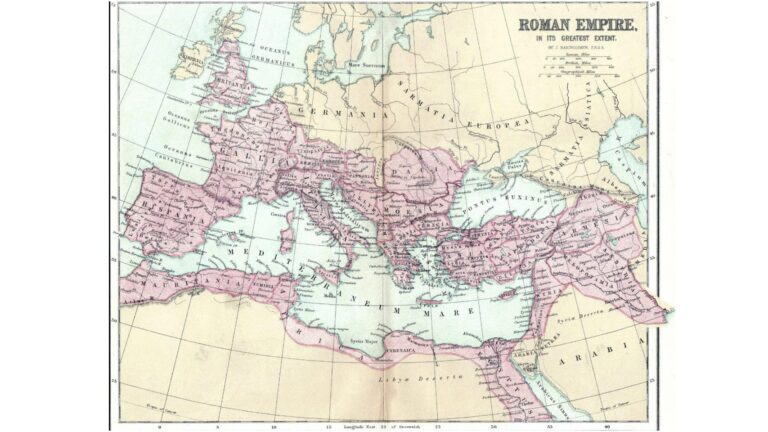
Persecution following the death of Stephen scattered believers into other parts of the Roman world. Some traveled as far as Antioch, a major city in Syria. And there something happened that would help change the direction of the early church.
People who had not grown up Jewish began responding to the Message of Jesus.
Antioch became a different kind of beginning.
A CHURCH THAT WASN’T PLANNED
Acts 11 tells us that believers scattered by persecution traveled through Phoenicia, Cyprus, and Antioch. At first, they shared the Message primarily with other Jews. But in Antioch, some began speaking to Greeks as well.
Many believed.
There was no carefully organized missionary campaign behind what happened. These were people who had been driven from their homes by persecution and carried their faith with them.
When news reached Jerusalem, the church sent Barnabas to Antioch.
Barnabas saw what was happening and encouraged the new believers. As the community continued to grow, he traveled to Tarsus looking for Saul.
That decision would prove enormously important.
Saul had returned to his home region after his earlier years in Jerusalem. Barnabas brought him to Antioch, and for a year the two men taught among the growing community of believers.
The man who would eventually carry the Message of Jesus throughout much of the Roman world was being prepared for that work in a congregation that itself had grown because ordinary believers had carried the Message somewhere new.
WHEN OLD BOUNDARIES BEGAN TO CHANGE
The significance of Antioch was not simply that another church had been established.
Something was changing within the church itself.
The first followers of Jesus were Jewish. Their Scriptures, worship, festivals, customs, and understanding of God had been formed within Judaism. Jesus himself was Jewish, as were his first disciples.
But Antioch brought Jewish and Gentile believers together in increasing numbers.
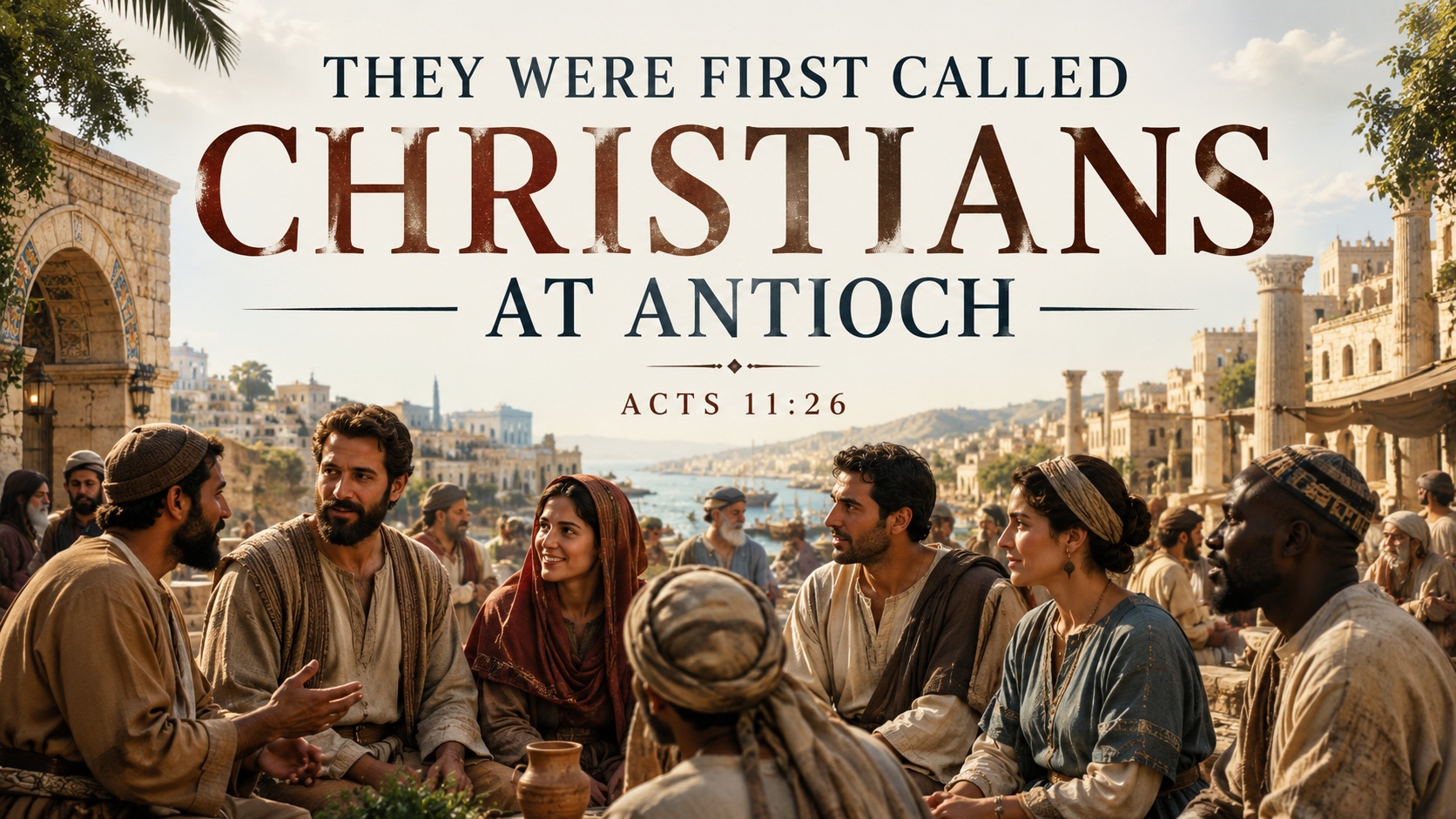
Acts gives us one small detail that suggests how noticeable this new community had become: it was in Antioch that the disciples were first called Christians.
A new name had appeared.
The believers themselves were still learning what this growing movement would mean. Questions about Gentile believers, Jewish practices, circumcision, food, and fellowship would not disappear. Some of those questions would eventually bring Paul and Barnabas back to Jerusalem for one of the most important discussions recorded in Acts.
But something had already begun in Antioch that could not easily be undone.
The Message of Jesus was moving beyond the community in which it had first taken root.
GIVING THE BIBLICAL ACCOUNT A HUMAN VOICE
Acts tells the story of Antioch in relatively few verses. We learn that Barnabas went there, that he found Saul in Tarsus, that they taught together for a year, that believers were first called Christians there, and that the Antioch congregation later sent assistance to believers in Judea.
Biblical fiction gives us an opportunity to imagine how people might have experienced those events.
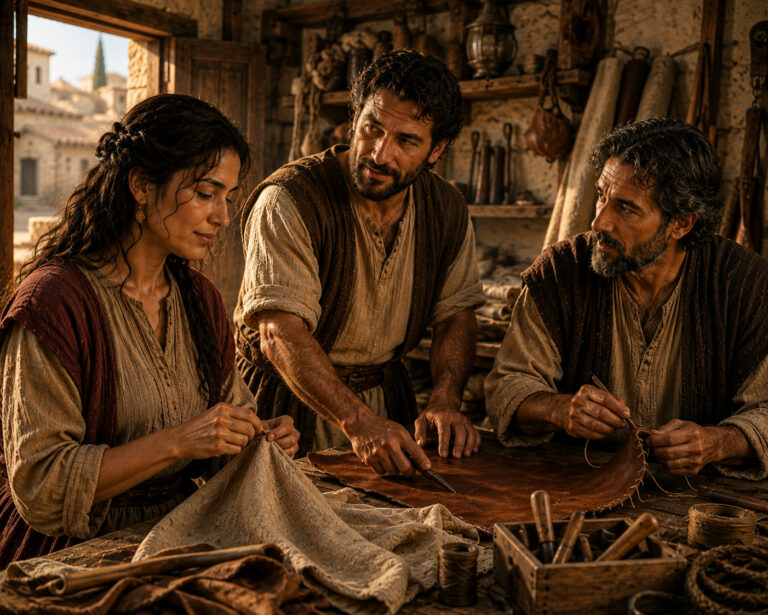
In The Vigil, Saul returns to Jerusalem with Barnabas and stays with his widowed sister, Judith. Brother and sister sit together and talk about what has happened since they last saw one another.
Judith remembers hearing that Barnabas had been sent to Antioch because the congregation was growing. Saul tells her that Barnabas later came looking for him in Tarsus and invited him to help.
Then he tells her about the remarkable community he has encountered: Jewish and Greek believers worshiping within the same growing congregation. He asks whether she has heard the new word being used for them—Christian.
The conversation is imagined, but Saul’s family is not simply an invention of the novel.
Acts tells us that Paul had a sister and a nephew, although it never gives us their names. Years later, when Paul is being held in Jerusalem, his nephew learns of a plot to kill him. He warns Paul and then tells the Roman commander, who takes extraordinary measures to move Paul safely out of Jerusalem.
In the Nightingale Mountain Trilogy, we give these two unnamed biblical figures names—Judith and Zedekiah—and introduce them much earlier in The Vigil. Rather than having Paul’s nephew suddenly appear when Acts requires him, readers have already come to know him as part of Paul’s family.
That relationship continues across the trilogy. By The Legacy, Zedekiah reaches the moment recorded in Acts when Paul’s unnamed nephew discovers the assassination plot against his uncle.
That is one way biblical fiction can personalize the biblical account without changing what Scripture tells us. The biblical text gives us Paul’s sister, her son, and eventually the nephew’s courageous intervention. The novels give them names and imagine the family life and relationships surrounding those events.
So when Saul sits with Judith in The Vigil and tells her what has happened in Antioch, we are imagining a conversation Scripture does not record between two people whose relationship Scripture does.
It allows the developments in Antioch to be heard not as entries in a history book, but as remarkable news one family member is sharing with another.
Barnabas came to find Saul.
Greeks are believing.
Jewish and Gentile believers are worshiping together.
And people in Antioch have begun calling these followers of Jesus by a new name.
Christians.
A CHURCH THAT LEARNED TO GIVE
There was another sign that Antioch had become something more than a distant collection of new believers.
When a prophet named Agabus warned of a coming famine, the disciples in Antioch decided to provide help for believers in Judea. They sent their gift through Barnabas and Saul.
The direction is worth noticing.
Jerusalem had sent Barnabas to Antioch to encourage a young congregation.
Now Antioch was sending Barnabas and Saul back to Jerusalem carrying help.
The newer church was supporting the older one.
In The Vigil, this becomes another part of Saul’s conversation with Judith. He explains that both Jewish and Gentile believers had contributed to the offering and that he and Barnabas had been entrusted with bringing it to the Jerusalem leaders.
Once again, a few verses in Acts become personal.
There were people behind that offering—people deciding what they could give, people trusting Barnabas and Saul to carry it, and people in Judea who would eventually receive it.
Antioch was already discovering that belonging to the church meant belonging to people beyond Antioch.
THE PLACE THAT SENT THEM OUT
The most consequential moment was still ahead.
Acts 13 brings us back to Antioch and names several prophets and teachers in its congregation. While the believers were worshiping and fasting, the Holy Spirit directed them to set apart Barnabas and Saul for another work.
The congregation prayed, laid hands on them, and sent them out.
From there Barnabas and Saul sailed to Cyprus.
The journeys we associate so closely with the apostle Paul had begun.
That makes Antioch’s place in the story of the early church remarkable.
People arrived there because persecution had scattered them.
They shared the Message with people who were different from themselves.
Barnabas came to encourage what was happening.
Barnabas brought Saul into the work.
Jewish and Gentile believers became part of the same community.
They helped believers hundreds of miles away.
And then they sent Barnabas and Saul farther still.
Jerusalem remained the place where the story had begun.
But Antioch showed what could happen when that story crossed boundaries.
WHY THIS STILL MATTERS
The church in Antioch did not begin with famous leaders arriving to establish it.
It began with scattered believers carrying their faith into a new place.
Barnabas and Saul became important to its story, but they entered a story that was already underway.
Perhaps that is part of what makes Antioch so compelling.
The Message moved because people carried it with them. A community grew among people who did not all share the same background. That community cared for believers somewhere else. And eventually it was willing to send some of its own leaders away so the Message could travel farther.
Antioch became important not because it replaced Jerusalem.
It became important because it demonstrated that what had begun in Jerusalem could take root somewhere else, among different people—and then move outward again.
Author Note
As we wrote the Nightingale Mountain Trilogy, we wanted the events recorded in Acts to remain the foundation of the story while allowing readers to experience those events through the lives and relationships of people living within that world.
Paul’s sister and nephew are a good example. Scripture tells us they existed and preserves one remarkable act by his nephew, but it tells us very little else about them. By introducing them earlier and allowing readers to know them across the trilogy, we could place some of the events recorded in Acts within an ongoing family story.
Saul’s conversation with Judith about Antioch in The Vigil is part of that story—an imagined conversation built around events the book of Acts records.
Featured Reading
If you enjoy exploring the historical world behind the New Testament, we invite you to continue the journey through the Nightingale Mountain Trilogy. The novels bring to life the people, places, and everyday realities of the first-century church, where history and faith meet through story.
Explore More
You can explore related posts across the remaining areas of the St. Hans blog: Nightingale Mountain Trilogy, Ministry & Church Leadership, Updates & Releases.
Written by D. D. Shiell — Author of the Nightingale Mountain Trilogy
Frequently Asked Questions
What is Christian historical fiction?
Christian historical fiction is a genre that combines historical settings and storytelling with themes related to faith, spiritual life, and the lived experiences of people shaped by religious belief.
What are some popular settings for Christian historical fiction?
Common settings include biblical times, the Roman Empire, the early church, medieval Europe, the Reformation, and various periods of modern history.
Why do readers enjoy Christian historical fiction?
Many readers enjoy the combination of immersive history, emotionally grounded storytelling, spiritual themes, and meaningful human questions explored through another time and place.
What makes early church historical fiction unique?
Stories set in the early church world often combine Roman history, biblical context, cultural tension, persecution, travel, and the spread of Christianity throughout the Mediterranean world.
What is the Nightingale Mountain Trilogy about?
The Nightingale Mountain Trilogy is a Christian historical fiction series set in the first-century Roman world, exploring the lives of families and communities connected to the growth of the early church.