Sometimes the most important result of learning something about the Bible is wanting to know more.
Over the past two weeks, we have been considering what it means to talk about the Bible and Jesus in a culture where Christian knowledge can no longer be assumed. We began with the problem of biblical literacy and then considered what it might be like to hear about Jesus for the first time.
But there is another step that matters.
What happens when someone becomes curious?
A person hears something about Jesus and wants to know whether it is really in the Bible. Someone encounters Paul in a novel and wonders what we actually know about him. A reference to Corinth or Ephesus leads to questions about the people who lived there and the churches that developed in those cities. A familiar biblical story turns out to be different or more complicated than someone remembered.
At that point, curiosity can lead a person back to the source.
WHEN THE BIBLE BECOMES SOMETHING TO EXPLORE
People who have known the Bible for years can easily forget how unusual a book it is for someone opening it for the first time.
It is not one continuous narrative written by a single author. It is a collection of writings produced over many centuries. It contains history, law, poetry, prophecy, letters, wisdom, biography, and other kinds of writing. Its people and events stretch across generations and across a large geographic area.
Even the New Testament can be confusing to a newcomer. Four books tell the story of Jesus. Acts continues with the story of his followers and the growth of the early church. Then come letters written to churches and individuals, followed by Revelation.
Someone who simply opens a Bible and starts reading without any guidance may not immediately understand how all of those pieces fit together.
That is one reason curiosity matters. A curious reader does not have to understand everything before beginning. There simply has to be a reason to turn the next page.
FOLLOWING A PERSON INTO THE BIBLICAL STORY
One way into the Bible is through its people.
That has certainly been true for us in writing the Nightingale Mountain Trilogy. Paul is not simply the name attached to a group of New Testament letters. When we follow his travels in Acts, we encounter a man moving from city to city, working with other people, facing opposition, forming friendships, teaching new believers, and trying to stay connected with communities he had left behind.
Then we can read his letters with those relationships in mind.
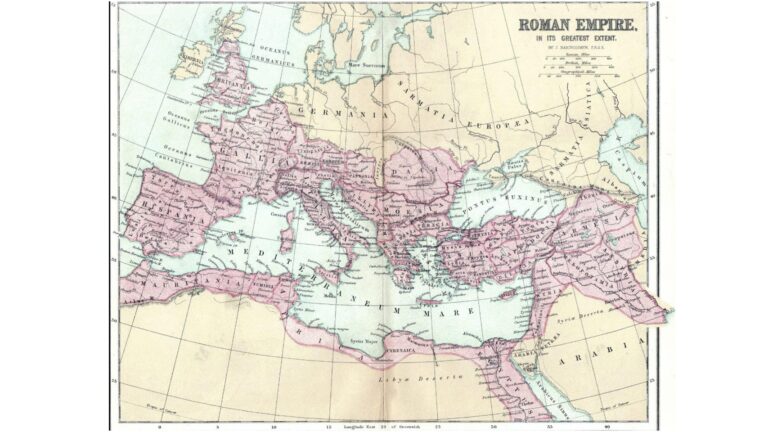
Corinth is no longer merely the word at the top of a page labeled First Corinthians. It was a real city where Paul lived and worked and where people he knew were trying to understand how to follow Jesus.
Ephesus becomes more than another place on Paul’s itinerary. Philippi becomes more than the name of another New Testament letter.
History can help make those connections visible. Once they become visible, returning to the biblical account can be much more interesting.
FICTION CAN RAISE REAL QUESTIONS
Historical fiction has a particular opportunity here.
A novel necessarily imagines things the historical record does not tell us. We do not know the names or stories of most ordinary people who lived in the first-century churches. We do not know every conversation Paul had or every household he entered. A novelist working in this period has to create characters, relationships, and events around what is known.
But good historical fiction can also make readers curious about what is known.
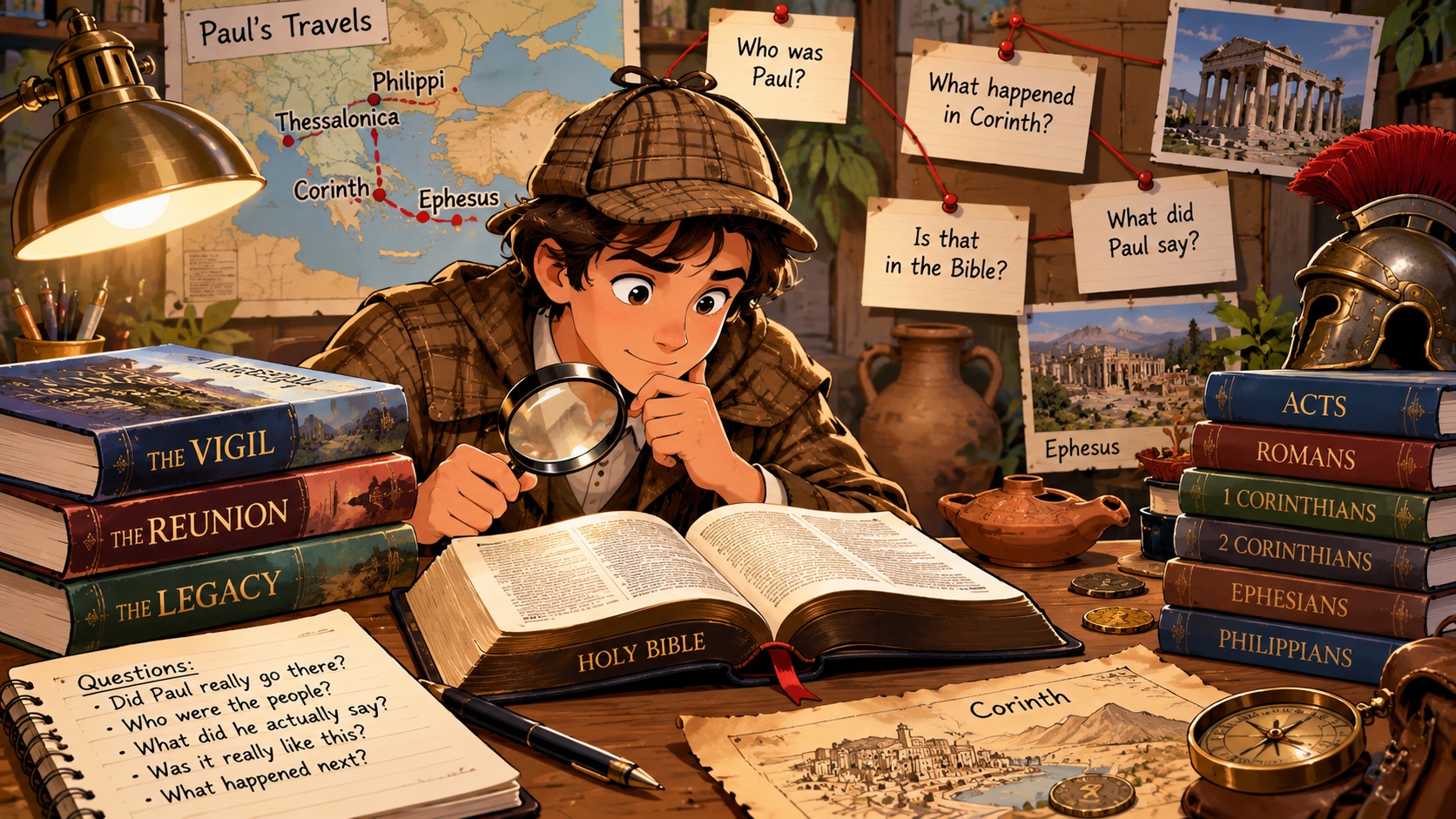
Did Paul really go there?
Is that person mentioned in Acts?
What did Paul actually say about that issue?
Was the Roman world really like this?
What happened to the church in that city?
Those are exactly the kinds of questions we hope readers sometimes ask while reading the Nightingale Mountain Trilogy. The novel is not the final authority for the biblical story, nor should it be. The Bible is where readers can go to distinguish the historical and biblical record from the parts of the story we have imagined.
In that sense, fiction can point beyond itself.
WHERE DO YOU BEGIN?
For someone unfamiliar with the Bible, being told simply to “read the Bible” may not be especially helpful. A better starting point is often connected to the question that created the curiosity in the first place.
If the interest is Jesus, one of the four Gospels is a natural place to begin. If someone wants to know what happened after the resurrection and how Christianity began spreading through the Roman world, Acts provides that story. Someone interested in Paul can meet him in Acts and then read the letters he wrote to early Christian communities.
The important thing is not to master the entire Bible immediately.
Read enough to begin recognizing the people. Look at a map when a place is unfamiliar. Ask why a letter was written and who received it. Notice the questions people asked Jesus and the questions his followers had to work through.
And when something does not make sense, ask someone.
For most of Christian history, learning the faith has never been simply a matter of an individual sitting alone with a book. Christians have read Scripture together, talked about it, taught one another, and learned from people who had been reading it longer than they had. That remains a good way to begin.
CURIOSITY DOES NOT HAVE TO BE CERTAINTY
There is another reason curiosity is valuable: it does not require someone to have already decided what he or she believes.
A person can read a Gospel because Jesus is interesting.
Someone can read Acts because the beginnings of Christianity are historically fascinating.
A reader can wonder whether Paul’s ideas have been represented accurately without first agreeing with Paul.
There is room to investigate.
For Christians, that should not be threatening. We believe the biblical story is worth encountering directly. We do not have to demand a particular conclusion before someone has even begun reading.
We can invite people to look for themselves.
WHY THIS STILL MATTERS
Our concern about biblical literacy has never been simply that people should recognize more biblical names or score better on a Bible quiz. Knowledge matters because without some knowledge of the Bible, it is difficult to understand Christianity and difficult to know Jesus as he is presented in the Christian Scriptures.
That is why curiosity matters so much.
A historical question can lead to Acts. A character can lead to one of Paul’s letters. A conversation about Christianity can lead to a Gospel. A novel can introduce a world that someone then wants to explore outside the novel.
We cannot know where that curiosity will lead.
But opening the Bible is a good next step.
Read one of the Gospels. Meet Jesus there. Read Acts and follow the first Christians into the Roman world. Ask questions. Talk with Christians who are willing to explore those questions with you.
You do not have to know everything before you begin.
Curiosity is enough to open the book.
Author Note
One of our hopes in writing the Nightingale Mountain Trilogy has always been that readers will sometimes become curious about the biblical world behind our stories. When Paul or another biblical person appears, we want readers to wonder what Scripture actually says. When our characters enter a city mentioned in Acts, we hope someone might turn to the biblical account and read what happened there.
Our novels tell imagined stories set within that world. They are not substitutes for the Bible. If they occasionally send a reader back to Scripture with a new question or a desire to know more about Jesus and the people who first followed him, they have accomplished something important to us.
Featured Reading
If you enjoy exploring the historical world behind the New Testament, we invite you to continue the journey through the Nightingale Mountain Trilogy. The novels bring to life the people, places, and everyday realities of the first-century church, where history and faith meet through story.
Explore More
You can explore related posts across the remaining areas of the St. Hans blog: Nightingale Mountain Trilogy, Ministry & Church Leadership, Updates & Releases.
Written by D. D. Shiell — Author of the Nightingale Mountain Trilogy
Frequently Asked Questions
What is Christian historical fiction?
Christian historical fiction is a genre that combines historical settings and storytelling with themes related to faith, spiritual life, and the lived experiences of people shaped by religious belief.
What are some popular settings for Christian historical fiction?
Common settings include biblical times, the Roman Empire, the early church, medieval Europe, the Reformation, and various periods of modern history.
Why do readers enjoy Christian historical fiction?
Many readers enjoy the combination of immersive history, emotionally grounded storytelling, spiritual themes, and meaningful human questions explored through another time and place.
What makes early church historical fiction unique?
Stories set in the early church world often combine Roman history, biblical context, cultural tension, persecution, travel, and the spread of Christianity throughout the Mediterranean world.
What is the Nightingale Mountain Trilogy about?
The Nightingale Mountain Trilogy is a Christian historical fiction series set in the first-century Roman world, exploring the lives of families and communities connected to the growth of the early church.